 Canadian fulfilment · Free shipping $199+

Tirzepatide
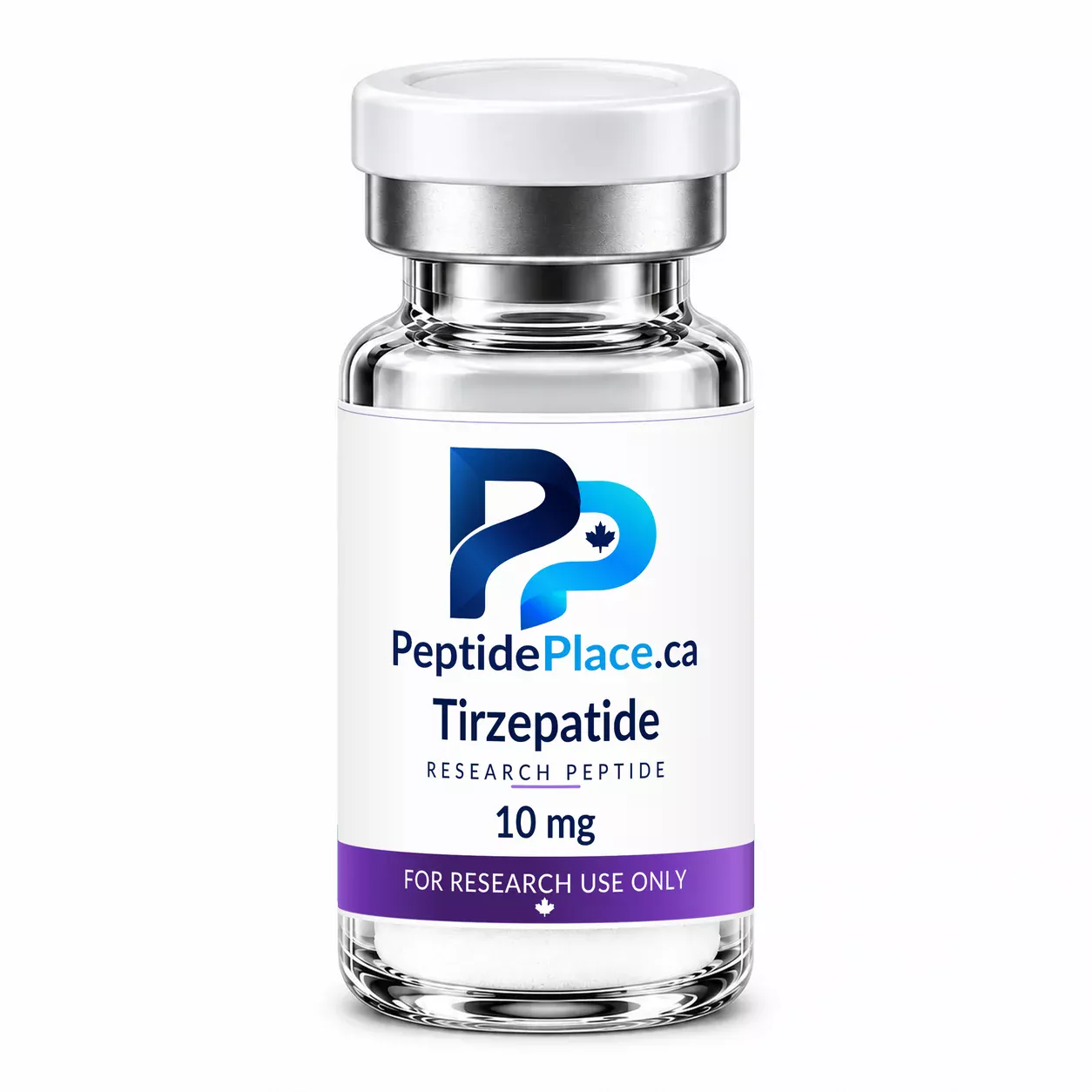
Packaging reference. Confirm the selected size and supplied label.
Metabolic research involving GIP and GLP-1 receptor signalling.
Multi-vial savings: Mix eligible vials. Save automatically.
For laboratory research only. Not for human or veterinary use.
The compound, clearly explained
What is Tirzepatide?
Tirzepatide is a peptide studied for activity at the GIP and GLP-1 receptors.
Know the material
Specifications
Categories: Weight & Metabolism
Additional information
| Size | 5 mg, 10 mg |
|---|
Exact size. Exact lot.
Batch & COA
Select a package size to view documentation for that exact SKU.
Research & references
What is Tirzepatide?
Tirzepatide is a peptide that activates two hormone receptors, GIP and GLP-1. Both are involved in metabolic signalling. Researchers have studied how activating both affects outcomes such as blood sugar and body weight.
What have researchers found?
What dual agonist means
An agonist activates a receptor. A dual agonist activates two. Here, the two targets are GIP and GLP-1. Mechanistic research helps explain how the molecule signals. Clinical studies measure outcomes in defined populations.
What SURMOUNT-1 found
In a placebo-controlled trial in adults with obesity or overweight without diabetes, researchers reported greater average weight loss with the trial preparation at 72 weeks. Gastrointestinal adverse events were common. Read the report for eligibility, discontinuations and the analysis used.
Studies and further reading
Vial options
Specifications and batch documentation
The selected vial’s nominal amount describes the catalogue package. Check the supplied form and lot documentation separately from the clinical study preparation.
Use the batch and COA panel for documentation for the exact size and lot. Identity, analytical purity and measured content are separate results. If you have a question about a vial, include the lot number from its label.
How to read a certificate of analysis · Browse published lab results
Storage and laboratory handling
Follow the written conditions for the supplied form and lot. Keep the original label and record the lot and date received. If your work depends on a particular storage temperature or stability window, ask for the product-specific documentation.
Compare the compound first
Composition & comparisons
How to compare trial results
A separate trial in people with diabetes may measure a different starting population or place more emphasis on blood sugar. Compare the trial duration, endpoints and handling of withdrawals before putting two percentages side by side.
Read the research in context
How a dual-receptor result is measured
A receptor assay can show how the compound signals through GIP and GLP-1. A human trial asks what happens to measured outcomes when people receive a defined study preparation. Receptor activity helps explain why the research was undertaken. It does not supply a numerical estimate for a clinical outcome.
How to read SURMOUNT-1
The trial enrolled adults with obesity or overweight without diabetes. Look for how it defined weight change, how long it followed participants and how it handled withdrawals. Read the gastrointestinal adverse events and discontinuations alongside the main result. This gives a clearer picture of the study than reading one percentage by itself.
A study in adults with type 2 diabetes answers a related question in a different population. Baseline characteristics, other therapies and the main endpoint can all differ. Keep these details with any result you use in a comparison.
How tirzepatide fits a three-way comparison
Semaglutide, tirzepatide and retatrutide have different receptor profiles. To compare trial findings, start with whether a head-to-head trial exists for the question. If you are reading separate studies, compare population, duration and analysis before comparing numbers.
Read the product specification and batch report together
Start with the product name, size and lot number. The product specification describes the supplied material and the amount listed on the label. A certificate of analysis, often called a COA, records what a lab found in a particular sample. Match the lot number before using any test result. When the listing has multiple sizes, check that the document applies to the selected size or explains why the same report covers more than one option.
Identity, purity and measured content are separate questions. An identity test checks which material the lab detected. A purity figure depends on the method and what that method measures. Measured content is a quantitative result and should state its units and basis. A result expressed as a percentage of chromatographic peak area does not tell you the milligrams present in a vial. Look for a separate content result if the amount matters to your work.
Keep a copy of the specification and matching report with your research records. If a field is important and the report does not give it, ask for the specific detail. For work that depends on storage temperature or stability, request the written conditions for the supplied form and lot. A reference paper may describe how its authors handled a different preparation, which is a separate record.
How to read a peptide COA · Peptide purity versus measured content · Peptide Place quality standards · Browse published lab results
Related product records: Retatrutide · Semaglutide 5 mg. For background and original sources, browse the Research Library or the peptide comparison guides.
A practical reading order
For a clinical comparison, write down the population, comparator, outcome and time point before looking at the results. Check whether the paper reports an average change in all participants according to the trial analysis or a result for a particular subgroup. Read the adverse-event findings with the outcome. Mechanistic receptor results belong in a separate row of your notes.
Tirzepatide vs semaglutide and retatrutide
Semaglutide activates GLP-1. Tirzepatide activates GIP and GLP-1. Retatrutide also activates the glucagon receptor. Use study design and outcomes to compare findings across the three.
Useful answers
Your questions about Tirzepatide
Which two receptors does tirzepatide activate?
GIP and GLP-1.
Did SURMOUNT-1 enrol adults with diabetes?
The cited trial enrolled adults without diabetes.
Does a clinical trial verify this vial?
The trial describes its own preparation. Check the specification and matching lot documentation for the vial.
What does the vial amount mean?
It is the nominal package amount. Look for a separate measured-content result if your work requires one.
How do I identify the correct lab report?
Match the product, package size and lot number. Check what the lab tested and how the result was reported.
Where can I check handling conditions?
Use the specification for the supplied form and lot. Contact the team if a condition required for your work is unclear.
Where is the matching lot report?
Select the exact size, then check the linked batch record. If no certificate is published, ask for the matching source report. A report for another size or lot is not evidence for this one.
Does a vial amount equal measured peptide content?
Not necessarily. The package amount is the listing specification. Check whether the source certificate separately reports measured content, and read its units and basis. Chromatographic purity is not a content assay.
Where are salt form and storage conditions listed?
Use the supplier-confirmed specifications for the material and lot. Reference chemistry does not confirm the supplied salt, terminal form or handling conditions. Contact Peptide Place if a required field is not documented.
How do Canadian shipping and payment work?
Pay by Interac e-Transfer using the order instructions. Shipping is tracked Canada Post Xpresspost: $18.99 below $199, or free from $199 after discounts and before tax. Transit timing depends on the destination and current carrier conditions.
Do you provide personal-use instructions?
No. These products are supplied for laboratory research only, not for human or veterinary use. Vial quantities do not describe a recommended dose.
How should I compare SURMOUNT with STEP or TRIUMPH?
Read the population and follow-up first, then check the outcome definition and whether the compounds were directly compared. Separate trials can inform the comparison while leaving a head-to-head question open.
What should I include in a documentation question?
Send the product name, the selected size and the lot number if you have it. If you need a specific result, such as identity or measured content, mention that too so we can help you find the right document.
Continue your research
Related research compounds
- Weight & Metabolism
Retatrutide
An investigational peptide studied for weight loss and blood sugar control.
From $69.99In stock
A question before you order?
Help with product information, documentation or an existing order.