 Canadian fulfilment · Free shipping $199+

BPC-157
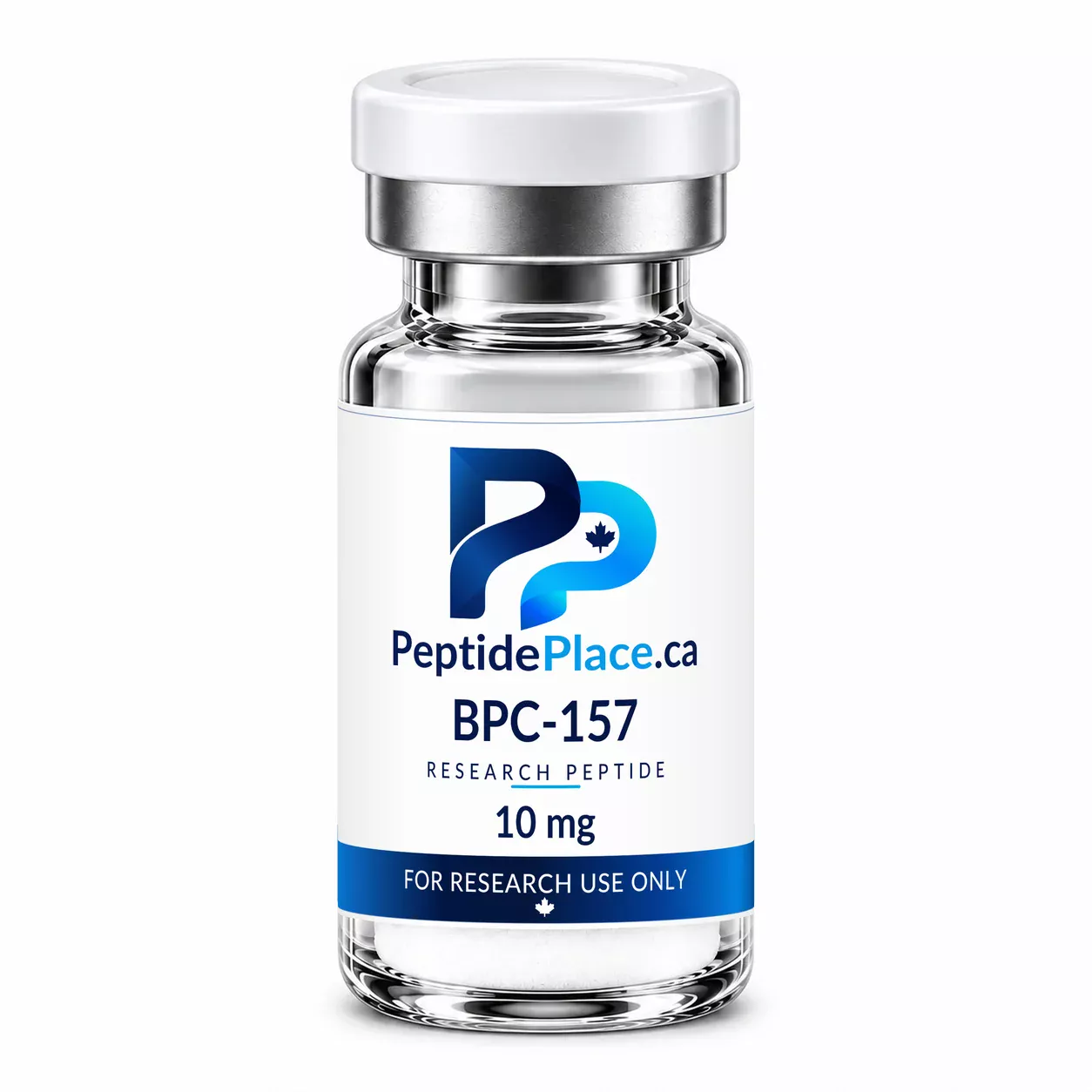
BPC-157 is a synthetic chain of 15 amino acids. It is commonly discussed for tissue repair, tendon and ligament recovery, and gut health. Those familiar topics explain its popularity; the underlying research asks how cells and tissues respond to injury.
Multi-vial savings: Mix eligible vials. Save automatically.
For laboratory research only. Not for human or veterinary use.
The compound, clearly explained
What is BPC-157?
BPC-157 is a short chain of 15 amino acids. Its connection to tissue repair is what brings many readers to this peptide: how tendons respond to injury, how connective tissue rebuilds and how the gut lining maintains its structure. Those are different research questions, but they share an interest in how damaged tissue responds.
Explore the BPC-157 research profile →Know the material
Specifications
| Package size / nominal content | 10 mg |
|---|
Categories: Repair & Recovery, Gut & Inflammation
Additional information
| Size | 10 mg |
|---|
Exact size. Exact lot.
Batch & COA
For documentation for a specific size or lot, send us the product name, size and lot number.
Research & references
What is BPC-157?
BPC-157 is a peptide made up of 15 amino acids. It often comes up in research on connective tissue, tendon cells and gut tissue. The studies ask different questions depending on the model.
What have researchers found?
What researchers found in tendon models
In a study using rat tendon samples and tendon-derived cells, researchers reported greater tissue outgrowth and increased cell migration under laboratory conditions. Outgrowth describes what extended from a tissue sample in culture. Migration describes the movement of cells in the experiment.
Why the gut literature is separate
A paper involving gut tissue or an animal injury model can provide evidence about that tissue and model. It does not answer the same question as a tendon-cell experiment. Look for the exact tissue, the comparator and how the researchers measured a response.
How to read a tissue finding
A laboratory measurement of cell movement differs from a test of tissue strength. Both differ from pain, function or time to return to activity in a human trial. Start with the endpoint the paper reports.
Read the research in context
What the tendon study measured
The researchers used rat tendon explants and tendon-derived fibroblasts. An explant is a small piece of tissue kept in culture. It lets investigators observe how cells behave while retaining some of the context of the original tissue. A fibroblast culture asks a narrower question about the behaviour of a cell type involved in making and maintaining connective tissue. Together, the two models help distinguish what happens at a tissue edge from what individual cells do under controlled conditions.
The paper reported greater outgrowth from tendon samples and increased movement of tendon-derived cells under the experimental conditions. Outgrowth describes what extended from the sample. Migration describes movement. If a study measures either one, read how the investigators counted the cells, how long they observed them and what the control group received. Neither measurement by itself tells you whether the tendon carried more load.
Tendon, ligament and muscle research ask different questions
Tendons transmit force from muscle to bone. Ligaments help stabilise joints. Muscle produces force. All three appear in discussions of repair and recovery, but a paper about one tissue does not establish a result for another. Start with the tissue named in the methods. Then look for whether it came from an animal, a cell culture or a person, and whether the experiment measured structure, mechanical behaviour or function.
A useful example is the difference between more cells moving into an area and the tissue withstanding more force before it fails. The first is a cell behaviour. The second requires a mechanical test. Human studies would need their own measures, such as pain, function or time to return to activity. Keeping those outcomes separate helps explain why a promising laboratory result can leave the practical question unanswered.
How to read the gut-tissue literature
Gut studies can ask about the intestinal lining, inflammation, blood flow or the response to an experimental injury. Before comparing a gut study with tendon research, identify what was modelled and what the authors measured. A change in tissue appearance, a change in a signalling molecule and a change in a clinical symptom are three different findings.
It is also worth checking when the researchers took the measurement. An early change in an experimental model can be useful for studying a mechanism. A later measurement can ask whether the effect persisted. Neither replaces a controlled study in people. For a comparison focused on inflammatory signalling, the KPV guide separates the two compounds and their research models.
Where the evidence is strongest
The orthopaedic systematic review is useful for seeing which injuries and models have been studied. Read its study table before applying the headline conclusion to a particular question. Evidence from multiple animal models can show that a question has been investigated in several settings. It cannot supply a human recovery estimate where the relevant trials are missing.
When comparing two papers, note four things: the material tested, the model, the comparison group and the outcome. If two papers use different injuries or measure different outcomes, describe those differences before trying to combine the results. This is especially important when a review groups tendon, ligament, muscle and bone studies under one broad label.
BPC-157 10 mg and the product record
The 10 mg on this listing is the nominal amount in the vial. The product record describes the material offered by Peptide Place. A paper describes the material its investigators used. A batch report describes tests on a sample from a particular lot. All three can be useful, but you need the appropriate record for the question you are asking.
For example, a paper can explain why cell migration was measured. It cannot identify the material in a catalogue vial. A certificate may report an identity or purity result. Check whether it separately gives the measured amount, the method and the basis used for that amount. Match the lot on the report with the lot on your label before relying on a result.
Read the product specification and batch report together
Start with the product name, size and lot number. The product specification describes the supplied material and the amount listed on the label. A certificate of analysis, often called a COA, records what a lab found in a particular sample. Match the lot number before using any test result. When the listing has multiple sizes, check that the document applies to the selected size or explains why the same report covers more than one option.
Identity, purity and measured content are separate questions. An identity test checks which material the lab detected. A purity figure depends on the method and what that method measures. Measured content is a quantitative result and should state its units and basis. A result expressed as a percentage of chromatographic peak area does not tell you the milligrams present in a vial. Look for a separate content result if the amount matters to your work.
Keep a copy of the specification and matching report with your research records. If a field is important and the report does not give it, ask for the specific detail. For work that depends on storage temperature or stability, request the written conditions for the supplied form and lot. A reference paper may describe how its authors handled a different preparation, which is a separate record.
How to read a peptide COA · Peptide purity versus measured content · Peptide Place quality standards · Browse published lab results
Related product records: TB-500 · KPV · Wolverine. For background and original sources, browse the Research Library or the peptide comparison guides.
BPC-157 and tendon research · BPC-157 vs KPV · Repair & Recovery research · Orthopaedic systematic review
A practical reading order
Use the BPC-157 research profile for a broader view of the literature, the tendon guide for a closer look at the experimental model, and the TB-500 comparison when you need to distinguish two materials often mentioned together.
Studies and further reading
Vial options
Specifications and batch documentation
For quantitative work, confirm the supplied form, counterion and basis for the listed content. Read nominal content separately from a measured quantity reported by a lab.
Reference chemistry and identity details
| Nominal vial content | 10 mg; supplier content basis requires confirmation |
|---|---|
| Reference class | Synthetic pentadecapeptide |
| Reference formula | C62H98N16O22 for the unmodified neutral peptide |
| Reference average molecular weight | Approximately 1419.5 g/mol; not a batch result |
| Reference database | PubChem CID 9941957 |
| Supplied salt and terminal form | Supplier confirmation pending |
Use the batch and COA panel for documentation for the exact size and lot. Identity, analytical purity and measured content are separate results. If you have a question about a vial, include the lot number from its label.
How to read a certificate of analysis · Browse published lab results
Storage and laboratory handling
Follow the written conditions for the supplied form and lot. Keep the original label and record the lot and date received. If your work depends on a particular storage temperature or stability window, ask for the product-specific documentation.
Laboratory storage and handling guide
Explore this topic further
Compare the compound first
Composition & comparisons
BPC-157 vs TB-500 and Wolverine
BPC-157 is a single peptide. TB-500 requires an identity check against the exact material in the source. Wolverine lists BPC-157 and TB-500 together.
Useful answers
Your questions about BPC-157
How many amino acids are in BPC-157?
Fifteen.
What did the tendon study measure?
Tissue outgrowth and movement of tendon-derived cells were among its laboratory endpoints.
Does the tendon experiment establish recovery time in people?
It did not measure recovery time in people.
What does the vial amount mean?
It is the nominal package amount. Look for a separate measured-content result if your work requires one.
How do I identify the correct lab report?
Match the product, package size and lot number. Check what the lab tested and how the result was reported.
Where can I check handling conditions?
Use the specification for the supplied form and lot. Contact the team if a condition required for your work is unclear.
Where is the matching lot report?
Select the exact size, then check the linked batch record. If no certificate is published, ask for the matching source report. A report for another size or lot is not evidence for this one.
Does a vial amount equal measured peptide content?
Not necessarily. The package amount is the listing specification. Check whether the source certificate separately reports measured content, and read its units and basis. Chromatographic purity is not a content assay.
Where are salt form and storage conditions listed?
Use the supplier-confirmed specifications for the material and lot. Reference chemistry does not confirm the supplied salt, terminal form or handling conditions. Contact Peptide Place if a required field is not documented.
How do Canadian shipping and payment work?
Pay by Interac e-Transfer using the order instructions. Shipping is tracked Canada Post Xpresspost: $18.99 below $199, or free from $199 after discounts and before tax. Transit timing depends on the destination and current carrier conditions.
Do you provide personal-use instructions?
No. These products are supplied for laboratory research only, not for human or veterinary use. Vial quantities do not describe a recommended dose.
How should I compare the tendon and gut papers?
Start with the tissue and endpoint. Tendon studies might measure migration or force, while gut studies can measure tissue damage or inflammation. A positive result on one endpoint supplies evidence only for that model and measurement.
What should I include in a documentation question?
Send the product name, the selected size and the lot number if you have it. If you need a specific result, such as identity or measured content, mention that too so we can help you find the right document.
Continue your research
Related research compounds
- Repair & Recovery
TB-500
Tissue repair and recovery research. Compare it with BPC-157 and thymosin beta-4.
$74.99In stock
- Peptide Blends
Wolverine
BPC-157 and TB-500 together in one blend for tissue-repair and recovery research.
$119.99In stock
- Gut & Inflammation
KPV
A three-amino-acid peptide studied in gut tissue and inflammatory-signalling research.
10 mg
$59.99In stock
- Peptide Blends
A question before you order?
Help with product information, documentation or an existing order.