 Canadian fulfilment · Free shipping $199+

NAD+
Out of stock
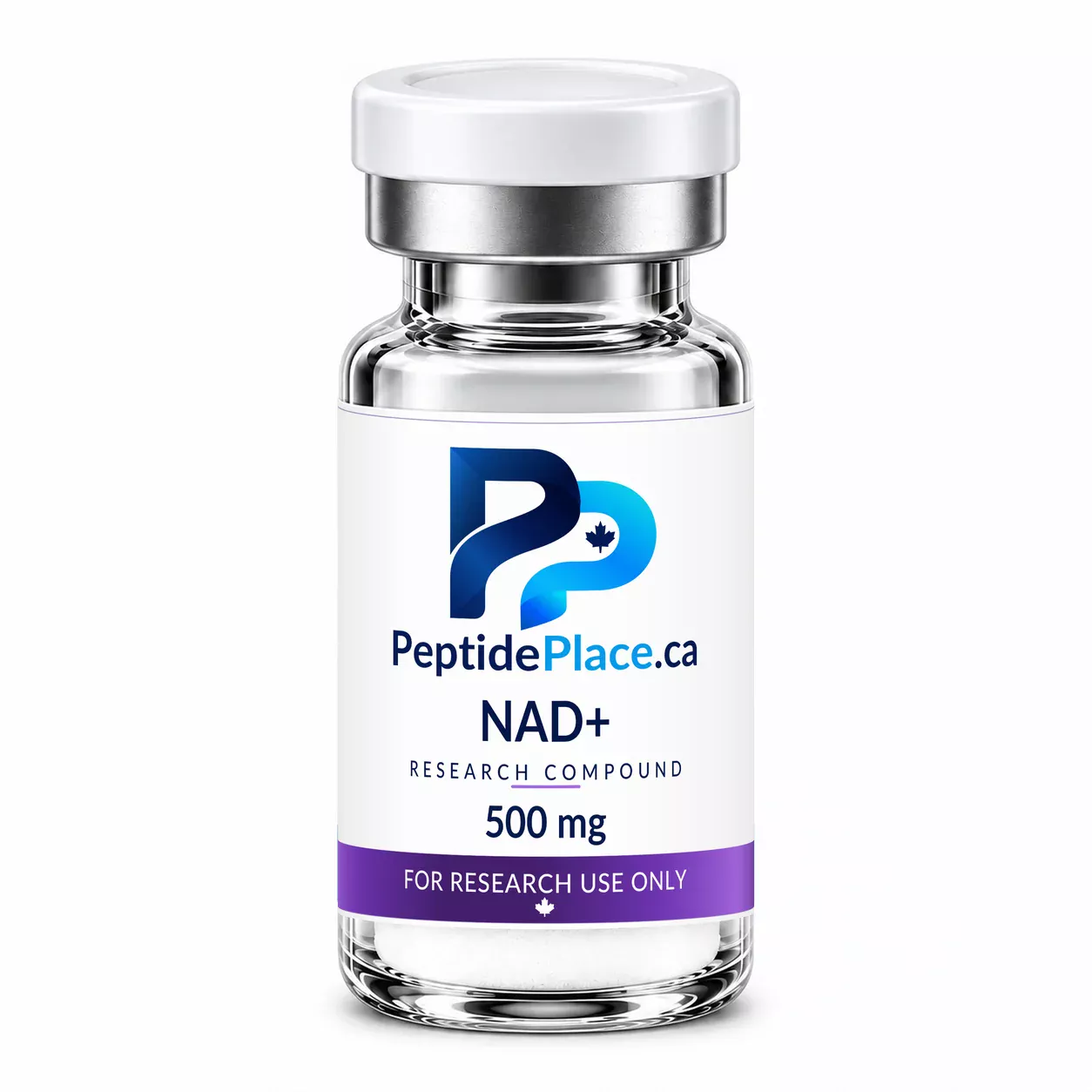
Cellular energy and metabolism research involving NAD+ and redox reactions.
Out of stock
Multi-vial savings: Mix eligible vials. Save automatically.
For laboratory research only. Not for human or veterinary use.
The compound, clearly explained
What is NAD+?
NAD+ is the oxidised form of nicotinamide adenine dinucleotide, a coenzyme involved in cellular redox reactions.
Know the material
Specifications
| Package size / nominal content | 500 mg |
|---|
Categories: Weight & Metabolism
Exact size. Exact lot.
Batch & COA
For documentation for a specific size or lot, send us the product name, size and lot number.
Research & references
What is NAD+?
NAD+ is short for nicotinamide adenine dinucleotide. It is a coenzyme, a molecule that helps enzymes carry out reactions. Cells use it to transfer electrons as they process nutrients.
What have researchers found?
What NAD+ and NADH tell you
NAD+ is the oxidised form. When it accepts electrons, it becomes NADH. Researchers may measure each form or the ratio between them. A change in total NAD is a different observation from a change in that ratio.
Why the sample matters
A measurement in blood, a cultured cell or a specific tissue describes that sample. When comparing papers, look for where the researchers measured NAD, which form the assay counted and how the results were normalised.
NAD+ and its precursors
Some studies investigate molecules the body can use to make NAD+, such as NMN or nicotinamide riboside. Check which material was tested and which outcome was measured before using the study to interpret this listing.
Read the research in context
How NAD+ and NADH are measured
A study may report NAD+, NADH, their sum or their ratio. Those are different measurements. A change in the ratio could reflect a change in either component. Read which form was measured and whether the result was normalised to cell count, tissue mass or another denominator.
Sample handling matters when comparing redox results. Look for how investigators collected the sample, separated the forms and handled the time between collection and measurement. A method used in one tissue or cell model may not yield a comparable number in another.
NAD+ as an enzyme substrate
NAD+ is discussed both as an electron carrier and as a substrate consumed by certain enzymes. When a paper describes a change in an enzyme pathway, ask whether the researchers directly measured NAD+ or inferred a relationship from another marker. The distinction helps separate a mechanism from a measured change in concentration.
Why precursor studies need their own comparison
A study of NMN or nicotinamide riboside starts with a different material. Before interpreting the result, identify the precursor, the sample measured and whether the endpoint was a metabolite level, a cellular response or a clinical outcome. The NAD+ listing has its own chemical form and batch documentation.
Read the product specification and batch report together
Start with the product name, size and lot number. The product specification describes the supplied material and the amount listed on the label. A certificate of analysis, often called a COA, records what a lab found in a particular sample. Match the lot number before using any test result. When the listing has multiple sizes, check that the document applies to the selected size or explains why the same report covers more than one option.
Identity, purity and measured content are separate questions. An identity test checks which material the lab detected. A purity figure depends on the method and what that method measures. Measured content is a quantitative result and should state its units and basis. A result expressed as a percentage of chromatographic peak area does not tell you the milligrams present in a vial. Look for a separate content result if the amount matters to your work.
Keep a copy of the specification and matching report with your research records. If a field is important and the report does not give it, ask for the specific detail. For work that depends on storage temperature or stability, request the written conditions for the supplied form and lot. A reference paper may describe how its authors handled a different preparation, which is a separate record.
How to read a peptide COA · Peptide purity versus measured content · Peptide Place quality standards · Browse published lab results
Related product records: MOTS-c. For background and original sources, browse the Research Library or the peptide comparison guides.
A practical reading order
Separate the redox question from the precursor question. If the paper reports a ratio, find the individual values if available. If the paper administers a precursor, record which one and whether the assay measured NAD+ directly. To compare NAD+ with MOTS-c, first distinguish a coenzyme involved in electron transfer from a peptide studied in metabolic signalling.
Studies and further reading
Vial options
Specifications and batch documentation
Check whether the supplied specification states the counterion, hydration and basis used for the listed mass. Those details affect calculations that convert mass to moles.
Use the batch and COA panel for documentation for the exact size and lot. Identity, analytical purity and measured content are separate results. If you have a question about a vial, include the lot number from its label.
How to read a certificate of analysis · Browse published lab results
Storage and laboratory handling
Follow the written conditions for the supplied form and lot. Keep the original label and record the lot and date received. If your work depends on a particular storage temperature or stability window, ask for the product-specific documentation.
Compare the compound first
Composition & comparisons
NAD+ vs NADH and precursors
NAD+ and NADH are different redox forms. NMN and nicotinamide riboside are precursors. Compare the chemical form, assay and measured outcome.
Useful answers
Your questions about NAD+
Is NAD+ a peptide?
NAD+ is a nucleotide-derived coenzyme.
What does the plus sign mean?
It denotes the oxidised form, commonly written NAD+. NADH is the reduced form.
Does a blood measurement tell me the level in a tissue?
It describes the sampled blood or blood component. Tissue levels require their own measurements.
What does the vial amount mean?
It is the nominal package amount. Look for a separate measured-content result if your work requires one.
How do I identify the correct lab report?
Match the product, package size and lot number. Check what the lab tested and how the result was reported.
Where can I check handling conditions?
Use the specification for the supplied form and lot. Contact the team if a condition required for your work is unclear.
Where is the matching lot report?
Select the exact size, then check the linked batch record. If no certificate is published, ask for the matching source report. A report for another size or lot is not evidence for this one.
Does a vial amount equal measured peptide content?
Not necessarily. The package amount is the listing specification. Check whether the source certificate separately reports measured content, and read its units and basis. Chromatographic purity is not a content assay.
Where are salt form and storage conditions listed?
Use the supplier-confirmed specifications for the material and lot. Reference chemistry does not confirm the supplied salt, terminal form or handling conditions. Contact Peptide Place if a required field is not documented.
How do Canadian shipping and payment work?
Pay by Interac e-Transfer using the order instructions. Shipping is tracked Canada Post Xpresspost: $18.99 below $199, or free from $199 after discounts and before tax. Transit timing depends on the destination and current carrier conditions.
Do you provide personal-use instructions?
No. These products are supplied for laboratory research only, not for human or veterinary use. Vial quantities do not describe a recommended dose.
Is an NAD precursor study the same as an NAD+ study?
Precursors enter pathways the cell uses to produce NAD+. An experiment with a precursor tests that intervention, so check the material name and the measurement before grouping its results with direct NAD+ work.
What should I include in a documentation question?
Send the product name, the selected size and the lot number if you have it. If you need a specific result, such as identity or measured content, mention that too so we can help you find the right document.
Continue your research
Related research compounds
- Weight & Metabolism
MOTS-c
Mitochondrial peptide research on cellular energy and metabolic regulation.
From $79.99In stock
A question before you order?
Help with product information, documentation or an existing order.