 Canadian fulfilment · Free shipping $199+

Skin & Hair Research Peptides
Compare single-compound GHK-Cu with the KLOW blend. Follow the evidence from collagen measurements in cultured cells to studies of finished skin and eyebrow formulations.
Compare the listings2 products
- Skin & Hair
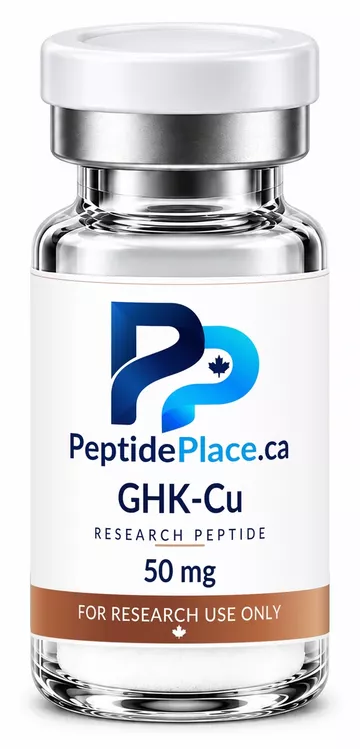
- Peptide Blends
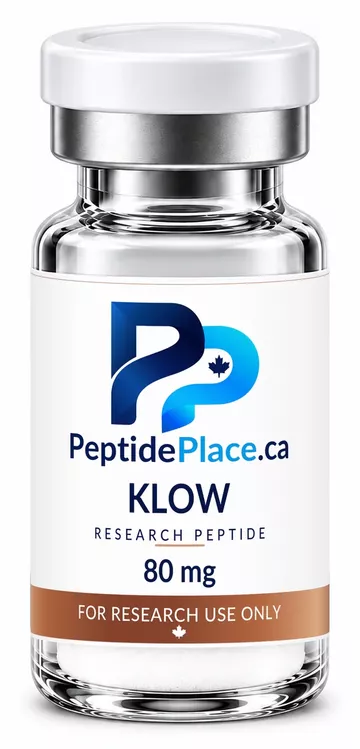
Compare GHK-Cu and KLOW
Skin and hair bring together several research questions: collagen production, extracellular matrix behaviour, skin-cell responses and hair-follicle biology. Those topics overlap, but a finding in one model does not answer every question about another. A cultured fibroblast is different from a hair follicle, and both are different from a finished cosmetic product assessed in people.
GHK-Cu is a copper-peptide complex. KLOW is a multi-peptide blend that lists GHK-Cu alongside BPC-157, TB-500 and KPV. This distinction is more useful than comparing only the total amount printed on each vial. Begin with what the material contains and which quantities have been documented; then read the evidence relevant to that material.
The catalogue provides current product information. The research guides explain why these names appear in the literature and where the limits of interpretation lie. Neither a product name nor a research category is a promise of a skin or hair outcome.
| Material | Composition | How to interpret its amount | Reading route |
|---|---|---|---|
| GHK-Cu | Copper-peptide complex | Review the stated form and product specification | GHK-Cu research profile and collagen guide. |
| KLOW | GHK-Cu, BPC-157, TB-500 and KPV | Total blend mass does not identify the GHK-Cu portion | GHK-Cu vs KLOW and blend composition guide. |
| GLOW, when discussed in comparisons | GHK-Cu, BPC-157 and TB-500 | Check component amounts instead of assuming a ratio | GLOW vs KLOW; use current product options separately. |
What makes GHK-Cu a copper peptide?
GHK refers to the peptide glycyl-histidyl-lysine. GHK-Cu identifies its association with copper. That difference matters when reading a label, a material specification or a publication. Do not silently substitute evidence for GHK, another copper-containing material or a finished formulation as though all describe the same supplied compound.
In an original fibroblast-culture study, researchers examined collagen synthesis in the presence of GHK-Cu. That helps explain the interest in this complex. The endpoint was a laboratory measurement, not a direct assessment of visible skin appearance or a claim about a research vial used outside that model.
Collagen, skin appearance and eyebrow research
Collagen is part of the extracellular matrix, the environment around cells that contributes to tissue structure. A paper measuring collagen production asks a different question from a study examining the behaviour of an epidermal cell or a hair-follicle model. Read the cell or tissue type before drawing a conclusion from the endpoint.
Finished cosmetic research adds further variables, including formulation, concentration, stability and how the product was assessed. A laboratory research material should not be described as an equivalent finished cosmetic merely because it shares an ingredient name. The material in the paper and the material on the product page need their own identity check.
Compare a single compound with a blend carefully
A single-compound listing and a combined formulation answer different composition questions. For KLOW, the total amount is not automatically an equivalent quantity of GHK-Cu. If individual component amounts are unconfirmed, leave them unconfirmed. A larger number for the entire blend does not establish that it contains more of the particular ingredient you are investigating.
Separate ingredient studies also do not establish how the exact mixture behaves. The useful comparison is not which name sounds more comprehensive, but whether the composition and available evidence address your research question.
Check the specification as well as the source paper
A paper explains the tested material and experimental result. A source certificate documents the sample analysed under its stated method. These are different records. For the supplied product, check the compound name, stated amount, material form where documented, and matching lot information. An analytical purity result is not the same measurement as peptide content, and neither is evidence of cosmetic performance.
Separate collagen, skin and hair findings
A collagen measurement in cultured cells does not establish a visible skin or hair outcome. Record whether a study tested GHK-Cu, a finished topical formulation or another copper-peptide material before comparing it with a research vial.
These collections organise research interests; they are not personal treatment recommendations or promises of an outcome. Peptide Blends is a product format.
A closer look at skin & hair research
Understanding the skin, hair and collagen conversation
Skin and hair research includes several separate questions: collagen production, extracellular matrix behaviour, follicle biology and the properties of a formulated cosmetic product. GHK-Cu is a useful name to recognise because it is a copper-binding peptide complex. KLOW includes GHK-Cu alongside other named ingredients. Those compositions do not have interchangeable evidence. A paper about a single copper-peptide complex does not establish the behaviour of a four-component mixture, and a result in cultured cells does not describe the performance of every finished cosmetic formulation.
What makes a copper peptide different?
GHK refers to a three-amino-acid peptide. GHK-Cu identifies its association with copper. Identity and composition matter when comparing a label to a publication. A supplied specification should describe the actual material, rather than relying only on an informal cosmetic name. In collagen research, also distinguish collagen synthesis from changes in visible skin appearance. A cell-culture endpoint can help explain why a compound is investigated without establishing a clinical outcome. The existing GHK-Cu profile explains that distinction and links to an original fibroblast study.
Comparing GHK-Cu with a blend
The practical question is whether you are comparing the same ingredient amount and material form. A nominal amount for KLOW represents the total blend. It cannot be treated as an equivalent amount of GHK-Cu unless the individual component quantities are documented. Keep the copper-peptide research, blend composition and current price in separate columns. That makes the comparison easier to read and avoids giving a larger total milligram number more meaning than it has. Use the GHK-Cu versus KLOW comparison for the ingredient differences, then open each product for its current specifications and report availability.
A practical reading order is to identify the compound, compare a related listing, then read the underlying study and the product documentation. The Research Library explains the terminology. Use the COA checklist to distinguish sample identity, analytical purity and measured content. The evidence-reading guide explains how to keep a laboratory observation separate from a result measured in people.
Skin & Hair questions
Is GHK the same name as GHK-Cu?
GHK names the peptide; GHK-Cu identifies its copper association. Confirm the material actually described in the source and specification.
Does collagen synthesis in cells establish a visible skin result?
No. It is a laboratory endpoint. A conclusion about visible appearance requires evidence that actually measures that outcome under defined conditions.
Is KLOW simply a larger GHK-Cu vial?
No. KLOW lists several ingredients. Its total blend amount should not be treated as the amount of one component.
Is a research vial a finished hair or skin product?
No. A supplied research material and a finished formulation have different specifications and evidence requirements.
Can I compare GLOW and KLOW without assuming ingredient ratios?
Yes. Compare their listed ingredients first. Use component quantities only when they are documented, and keep current price and availability in a separate part of the comparison.
Why do two GHK-Cu studies sometimes appear to disagree?
Check the formula, comparison group, site and outcome. A cultured-cell collagen assay, a skin appearance assessment after a procedure and an eyebrow hair count measure different things.
Follow the research
Sources and study context
PRIMARY SOURCE: Maquart et al., FEBS Letters (1988), DOI 10.1016/0014-5793(88)80509-X, PMID 3169264. Read the original study