 Canadian fulfilment · Free shipping $199+

Gut & Inflammation Research Peptides
Compare KPV, BPC-157 and KLOW in intestinal tissue and inflammatory-signalling research. See how peptide uptake, cell markers and tissue outcomes fit together.
Compare the listings3 products
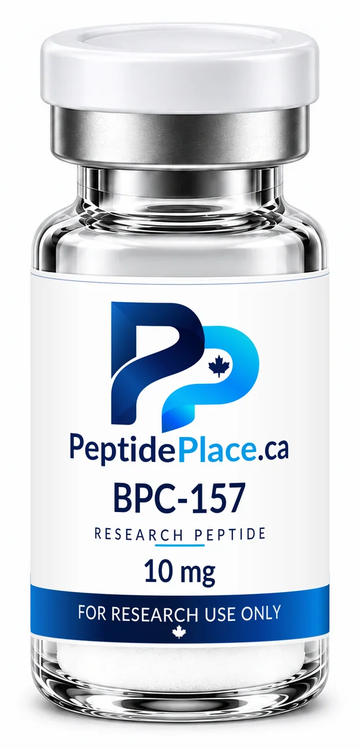


Compare KPV, BPC-157 and KLOW
Inflammation and immune signalling cover many biological questions. A study might examine an intestinal cell response, a signalling marker, tissue changes in an animal model or another defined endpoint. These are related subjects, but they are not interchangeable measurements of a single outcome.
That is why this category starts with research context rather than a list of promised benefits. KPV, BPC-157 and KLOW have different compositions. Their appearance in the same browsing category should not be read as evidence that they address the same question or have equivalent findings.
Use the individual product pages to confirm the current listing, then follow the relevant research guide. For a blend, distinguish evidence on a named ingredient from evidence on the exact mixture. For the supplied material, check its own documentation separately from interpreting a source paper.
| Material | Composition | Useful research question |
|---|---|---|
| KPV | Single-peptide material | What does the source examine about transport, intestinal cells or inflammatory signalling? |
| BPC-157 | Single-peptide material | Which tissue model and measured endpoint are actually described? |
| KLOW | GHK-Cu, BPC-157, TB-500 and KPV blend | Are the component quantities documented, and was the exact mixture studied? |
What researchers measure in gut-tissue models
The gut includes different tissues, cell populations and experimental models. A cell line provides a controlled setting for asking one kind of question. An animal model brings different variables. Neither should be described as though it automatically establishes an outcome in a person.
An original KPV paper investigated transport and inflammatory responses using intestinal and immune-cell experiments and mouse colitis models. The material, experimental systems and measured signals are the important starting points for interpreting that research. The paper is not a certificate for a supplied vial and should not be rewritten as a personal treatment recommendation.
How to interpret inflammatory markers
A signalling marker is a measurement within a defined experiment. It is different from a description of symptoms, whole-body immune function or a clinical outcome. When a summary uses a broad word such as inflammation, return to the paper and check what was actually measured.
Ask four questions: What model was used? Which marker or tissue endpoint was measured? What material was tested? What limits did the authors identify? These questions make it easier to compare sources without turning different experiments into a single claim about effectiveness.
The research-reading guide explains why a mechanism, a laboratory finding and an outcome measured in people belong at different levels of interpretation: https://peptideplace.ca/how-to-read-peptide-research/
BPC-157 and KPV should be compared individually
BPC-157 and KPV are distinct materials. A shared place in gut-related discussions does not establish that their evidence, composition or experimental conditions match. Use the comparison guide to separate the compound identities, reference information and current product specifications.
When a research question crosses between gut tissue and tissue repair, the Repair & Recovery category provides another route into the catalogue. That link is there to help you follow the subject, not to imply that all products in both categories are equivalent.
| Measure | Question it answers | Check first |
|---|---|---|
| Peptide uptake | How did the material enter cells? | Transporter, cell type and controls. |
| Inflammatory marker | Which signal changed under the test conditions? | Marker, measurement and time point. |
| Tissue outcome | What changed in the studied tissue? | Model, tissue and scoring method. |
Keep blend composition visible
KLOW lists several named ingredients, including KPV and BPC-157. Its nominal total amount does not identify how much of either component is present unless that quantity is documented. Do not infer an equal split or treat the total amount as though it described one ingredient.
Ingredient-specific studies provide background for understanding why the names appear together. They do not by themselves test the finished combination. A clear blend comparison states the listed components, identifies unconfirmed quantities and keeps product availability separate from the research discussion.
Documentation answers a different set of questions
For a product, the relevant record is the one matched to its compound, size and lot. Identity, analytical purity and measured content are different fields. A report should be read for what its method establishes; it does not demonstrate every biological outcome discussed in the literature.
If no matching source record is published, treat that as unavailable documentation. Do not substitute a certificate from another batch or describe the absence of a record as a favourable test result.
Keep the model attached to the signal
An intestinal-cell experiment or mouse colitis model can investigate an inflammatory pathway without establishing a human treatment effect. Keep KPV transport findings, BPC-157 tissue models and finished-blend evidence distinct.
These collections organise research interests; they are not personal treatment recommendations or promises of an outcome. Peptide Blends is a product format.
A closer look at gut & inflammation research
Gut and inflammation research: name the endpoint
Inflammation is a biological process involving many signals and cell types. Gut-related research can examine epithelial cells, the intestinal barrier, immune-cell activity or tissue responses. These questions are related but not interchangeable. KPV and BPC-157 appear in the same broad conversation because their research includes intestinal or inflammatory models. KLOW adds a blend-composition question. A useful starting point is to identify the experimental model and the measured response, rather than treating the category as a single demonstrated benefit.
What is different about KPV?
KPV is a three-amino-acid peptide. A published experimental study examined its transport through PepT1 and inflammatory-signalling responses in cells and mouse colitis models. This provides a specific research context, not a general treatment conclusion. BPC-157 has a different sequence and a separate research history. Reading those materials side by side means checking both compound identity and the kind of evidence being discussed. The KPV versus BPC-157 comparison keeps those differences visible, rather than assuming that two gut-related search terms describe the same material.
How to evaluate a blend in this category
A mixture containing KPV does not inherit every conclusion from a KPV experiment. Ingredient amounts, material identity and the tested formulation matter. If a blend’s component ratio is unavailable, report that as missing information instead of assuming equal quantities. Likewise, a purity figure for one ingredient is not a composition analysis for the finished blend. The KLOW and Wolverine comparison explains the ingredient lists. For the supplied product, match the exact SKU and lot to an available source report before interpreting analytical information.
A practical reading order is to identify the compound, compare a related listing, then read the underlying study and the product documentation. The Research Library explains the terminology. Use the COA checklist to distinguish sample identity, analytical purity and measured content. The evidence-reading guide explains how to keep a laboratory observation separate from a result measured in people.
Gut & Inflammation questions
Are gut-tissue and immune-cell studies the same?
No. They can examine related processes, but the cell type, model and measurement need to be read separately.
Does a change in a signalling marker establish a clinical result?
No. It is a result within its experimental setting. It should not be substituted for an outcome that the study did not measure.
Is KPV equivalent to BPC-157?
No equivalence should be assumed. Compare their identities, source evidence and product specifications independently.
Does KLOW's total amount identify the KPV quantity?
Not unless component quantities are documented. The nominal total describes the blend rather than one selected ingredient.
What should I check first on a batch report?
Match the compound, size and lot to the label, then check the source laboratory, method, date and reported result.
Can I compare two studies just because both mention inflammation?
Start with the actual measure. A signalling marker, a mouse tissue score and a symptom reported by people are different outcomes.
Follow the research
Sources and study context
PRIMARY SOURCE: Dalmasso et al., Gastroenterology (2008), DOI 10.1053/j.gastro.2007.10.026, PMID 18061177. Read the original study