 Canadian fulfilment · Free shipping $199+

Repair & Recovery Research Peptides
Compare BPC-157, TB-500, Wolverine and KLOW for laboratory research. Start with the material in each listing, then see what tendon, connective-tissue and injury-model studies actually measured.
Compare the listings4 products
- Repair & Recovery
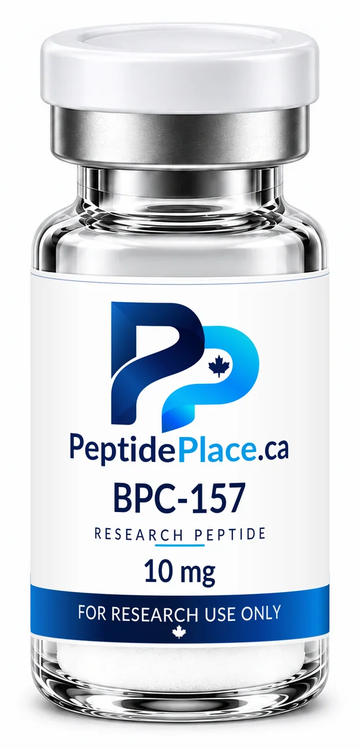
BPC-157
Tendon and ligament recovery, tissue repair and gut research, explained simply.
10 mg
$69.99In stock
- Peptide Blends
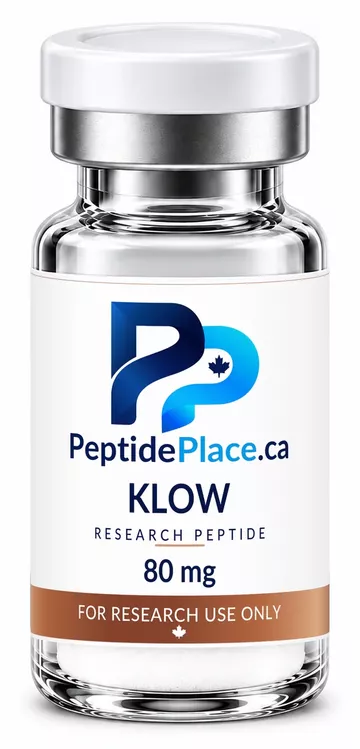
- Repair & Recovery
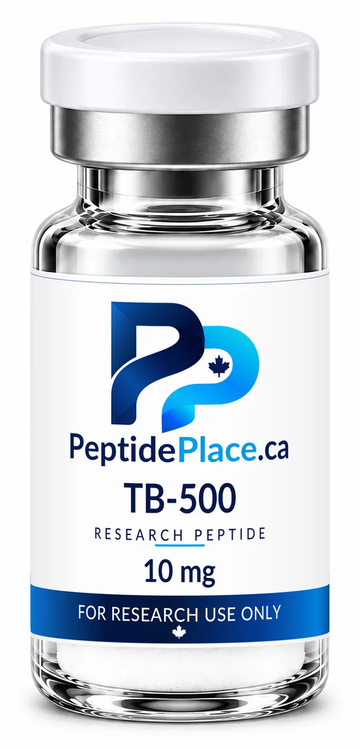
TB-500
Tissue repair and recovery research. Compare it with BPC-157 and thymosin beta-4.
$74.99In stock
- Peptide Blends
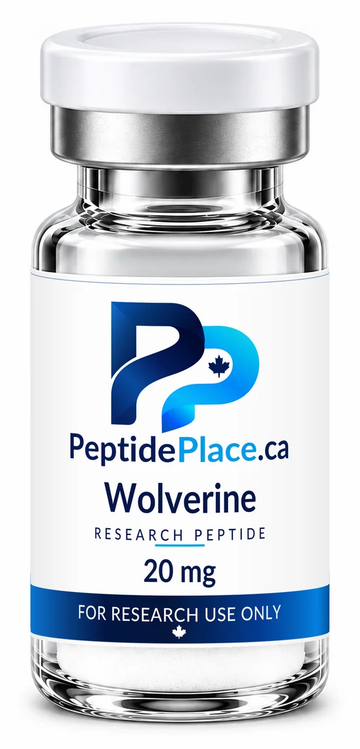
Wolverine
BPC-157 and TB-500 together in one blend for tissue-repair and recovery research.
$119.99In stock
Compare BPC-157, TB-500, Wolverine and KLOW
Repair and recovery is a useful way to browse a catalogue, but it covers several kinds of research. Tendon-cell behaviour, connective-tissue organisation, cell movement and gut-tissue responses are separate questions. A compound appearing in one of these discussions does not mean it has been studied for every tissue or under every experimental condition.
Start with the exact material. BPC-157 is a single peptide. TB-500 is a supplier designation that requires particular care when matching a product to a paper. Wolverine lists BPC-157 and TB-500 together, while KLOW lists those ingredients alongside GHK-Cu and KPV. These ingredient lists give you a starting point for comparison; they do not establish equivalent research findings.
Use the table to separate composition from research context. Open the individual product page for current sizes, specifications and available batch documentation. Product availability can change without changing the educational differences between the compounds.
| Compound | Composition to check | Useful next step |
|---|---|---|
| BPC-157 | Single-peptide material | Read the BPC-157 research profile, then compare with TB-500. |
| TB-500 | Confirm exact supplied identity and form | Distinguish TB-500 documentation from papers on related thymosin beta-4 material. |
| Wolverine | BPC-157 + TB-500 blend | Compare the total vial amount with documented ingredient amounts. |
| KLOW | GHK-Cu + BPC-157 + TB-500 + KPV blend | Compare four ingredients with the two listed for Wolverine. |
What tendon and connective-tissue studies measured
Tendons connect muscle to bone; ligaments connect bones to one another. Their shared place in recovery discussions should not obscure the different study models used to investigate them. A cell-culture experiment, an isolated tendon preparation and an animal injury model do not measure the same thing.
An original BPC-157 paper examined tendon explant outgrowth and tendon fibroblast behaviour. That is a useful example of why the measured endpoint matters. Cell migration describes movement under the experimental conditions. It does not by itself establish a recovery timeline or a clinical result in a person. Read the methods and limitations alongside the headline finding.
TB-500 and thymosin beta-4 terminology
Do not assume that every paper mentioning thymosin beta-4 describes the material sold under a TB-500 label. Before applying a source, compare the publication's actual material with the supplied specification. Where the sequence, terminal form or other identity fields have not been documented, describe that uncertainty rather than filling it in from an unrelated listing.
The BPC-157 vs TB-500 comparison separates these identity questions from the current catalogue information. It is a better starting point than ranking different compounds by price per milligram or treating a similar research interest as proof of equivalence.
A blend needs its own composition check
A total blend amount tells you the nominal combined quantity in the vial. It does not tell you the quantity of each ingredient unless those component amounts are documented. Do not infer an equal split or treat the total amount as though it were all BPC-157.
Research on separate ingredients is also different from research on the finished mixture. When comparing Wolverine or KLOW, keep three questions separate: what is listed, which quantities are confirmed, and what material was used in the cited study. This makes the comparison useful without implying that separate evidence proves the complete blend.
Read the model before the conclusion
Look for the tissue or cell type, comparator, endpoint and experimental material. An observation about collagen production is different from a mechanical test, and neither automatically describes a person's pain, function or return to activity. The research-reading guide explains these distinctions. For the supplied vial, use its own specifications and matching source report separately from interpreting a publication.
| Outcome | What it tells you | What to look for |
|---|---|---|
| Cell migration | How cells moved under the laboratory conditions. | Cell type, comparator and observation period. |
| Tissue mechanics | How tested tissue behaved under load. | Injury model, mechanical test and time point. |
| Human function | Performance on a defined measure in participants. | Population, comparator and follow-up. |
Read the tissue endpoint, then choose your comparison
Tendon-cell movement, tissue outgrowth and whole-tissue mechanical findings are different endpoints. Begin with the exact BPC-157 or thymosin-related material in the source paper; do not substitute a TB-500 designation for a confirmed sequence.
These collections organise research interests; they are not personal treatment recommendations or promises of an outcome. Peptide Blends is a product format.
A closer look at repair & recovery research
What does repair and recovery research cover?
Repair and recovery is a starting point for research into connective tissue, cell movement and responses to injury. Tendons, ligaments, muscle and the intestinal lining have different structures and functions. A result in one tissue cannot answer every question about another. Begin with the tissue and endpoint you want to understand, then identify the compound and study model. BPC-157 and TB-500 often appear together in recovery discussions, but they are distinct materials. Wolverine combines their named ingredients; it does not turn their separate research histories into evidence for a specific combined formulation.
BPC-157, TB-500 and Wolverine: three different questions
BPC-157 research includes experiments involving tendon-derived cells and tissue responses. TB-500 needs an additional identity check: the name is sometimes used alongside research on full-length thymosin beta-4, although those materials should not be assumed to be identical. Wolverine is a blend, so its total vial amount must be interpreted alongside its individual ingredient amounts. If component quantities have not been confirmed, an equal split cannot be inferred. A useful comparison distinguishes a single compound from a mixture before comparing the package price.
Read the tissue evidence before drawing a conclusion
In a tendon study, cell migration describes cells moving under the experimental conditions. Collagen production describes a laboratory endpoint. Mechanical testing asks about a tissue property. None is automatically equivalent to recovery time, pain relief or return to activity in a person. Look for a control group, the exact material and the authors’ stated limitations. The BPC-157 research profile and the BPC-157 versus TB-500 comparison provide a route from the catalogue to the supporting papers. Match the listed product to its own documentation separately from interpreting those experiments.
A practical reading order is to identify the compound, compare a related listing, then read the underlying study and the product documentation. The Research Library explains the terminology. Use the COA checklist to distinguish sample identity, analytical purity and measured content. The evidence-reading guide explains how to keep a laboratory observation separate from a result measured in people.
Repair & Recovery questions
Are BPC-157 and TB-500 the same compound?
No. They are separate catalogue materials. Compare their identities and source literature individually rather than assuming that a shared recovery topic makes them interchangeable.
Is TB-500 automatically identical to thymosin beta-4 in a paper?
No. Match the exact material and specification. A related name is not sufficient evidence that the supplied material and the published material are identical.
Is Wolverine equivalent to a single BPC-157 vial?
No. Wolverine lists BPC-157 and TB-500 as a blend. The ingredient list and documented component amounts must be considered separately from the total vial amount.
Does a laboratory result establish a personal recovery benefit?
A finding applies to the material, model and endpoint studied. It should not be presented as an established result for a person using a catalogue research material.
Where can I check the available product documentation?
Open the product page and Lab Results. Match the compound, size and lot. If no matching report is published, ask about that exact record rather than relying on another batch.
Which page should I start with if I am comparing single compounds and blends?
Start with the four-listing table. Use the BPC-157 and TB-500 comparison for identity and study models, and the Wolverine and KLOW comparison for component lists and documented amounts.
Follow the research
Sources and study context
PRIMARY SOURCE: Chang et al., Journal of Applied Physiology, DOI 10.1152/japplphysiol.00945.2010, PMID 21030672. Read the original study