 Canadian fulfilment · Free shipping $199+

Start here
Learn About Peptides
Understand peptides, get to know the compounds, then learn how to read the research.
You do not need a science degree to understand the catalogue. Learn the familiar names, compare the compounds that interest you, then read the supporting detail at your own pace.
Three steps to get started
1. Understand peptides
Peptides are short chains of amino acids. Start with the names, structures and terms.
Read guide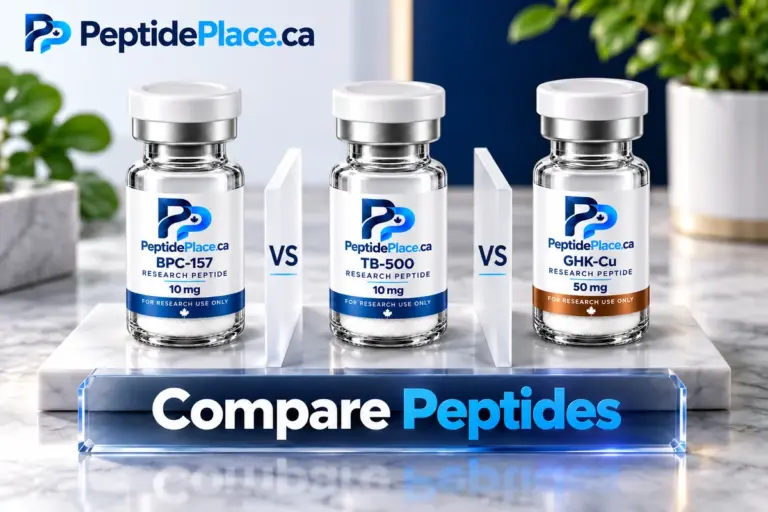
2. Get to know the compounds
See how familiar compounds differ, from tissue-response research to skin and metabolism.
Read guide
3. Learn how to read research
Find out what was tested, what was measured and what the result can tell you.
Read guideStart with a name, then follow your question
A category such as recovery is a useful starting point. The next step is the actual compound name: changing a peptide’s sequence can change what is being studied.
BPC-157 and TB-500 often appear in recovery discussions. GHK-Cu and KLOW introduce single ingredients versus blends. Retatrutide, MOTS-c and tesamorelin show why compounds discussed around metabolism can work through different pathways.
When a study catches your attention, check the material, the study model and the measured outcome. A cell experiment answers a different question from a trial in people.
Useful guides as you go
Open the guide that answers your next question.
Understand peptide blends → · Read peptide specifications → · HPLC vs LC-MS testing → · Explore research interests →