 Canadian fulfilment · Free shipping $199+

GLOW
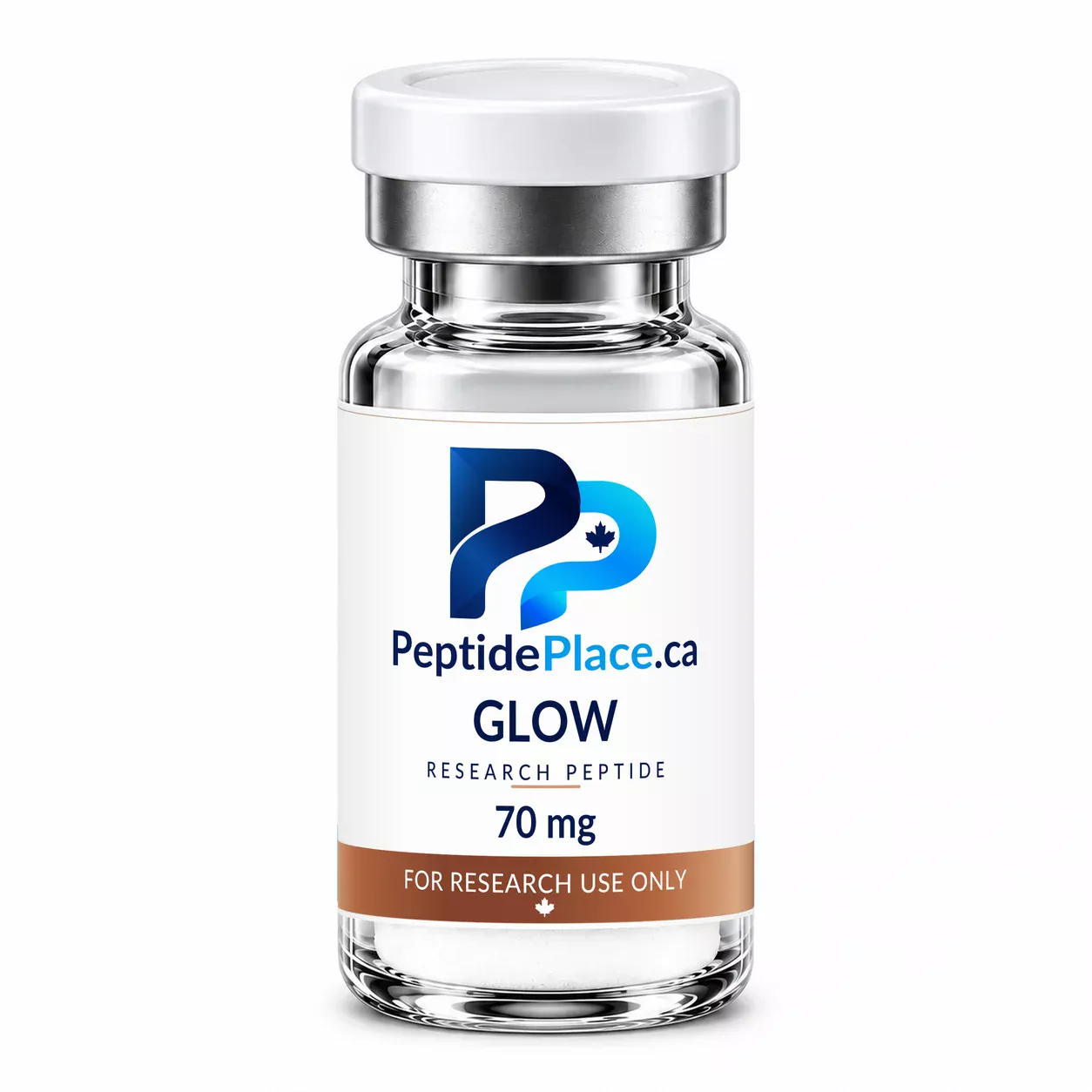
Three-peptide blend for skin, collagen and tissue research.
Multi-vial savings: Mix eligible vials. Save automatically.
For laboratory research only. Not for human or veterinary use.
The compound, clearly explained
What is GLOW?
GLOW combines GHK-Cu, BPC-157 and TB-500 in one research blend. The 70 mg vial states the total blend amount.
Know the material
Specifications
| Package size / nominal content | 70 mg |
|---|
Categories: Peptide Blends
Exact size. Exact lot.
Batch & COA
For documentation for a specific size or lot, send us the product name, size and lot number.
Research & references
What is GLOW?
GLOW is a three-component research blend containing GHK-Cu, BPC-157 and TB-500. These names come up in different kinds of research on collagen, tissue and cell movement.
What have researchers found?
GHK-Cu and collagen
In a laboratory study, fibroblasts exposed to GHK-Cu produced more collagen. The experiment tested GHK-Cu in cultured cells. It did not test the three-component blend.
BPC-157 and tendon models
A study using rat tendon tissue and tendon-derived cells reported increased tissue outgrowth and cell movement under laboratory conditions. These were measurements in an experimental model.
TB-500 and the exact material
Thymosin beta-4 literature can involve the full peptide or a defined fragment. Look for the sequence and form used in the paper. A blend listing needs its own documentation for the TB-500 component.
What would show an effect of the blend?
Look for a study that describes the exact three ingredients, the amount of each, the experimental model and a comparison group. The cited papers describe separate ingredients or related materials.
Read the research in context
Read the three ingredients separately
The GHK-Cu paper measures collagen production in cultured fibroblasts. The BPC-157 paper examines behaviour in rat tendon preparations. The full-length thymosin beta-4 paper uses an animal wound model. These experiments vary in material, tissue and endpoint. A collagen measurement from one experiment cannot explain tissue outgrowth in another.
An ingredient list is a useful way to choose what to read next. It is also the first place to check how GLOW differs from KLOW or Wolverine. After identifying a shared ingredient, compare the documented amount and material form rather than relying on the total amount on the front label.
What evidence on the finished mixture would look like
A blend experiment should identify all three components and their amounts. If the question is whether combining them changes a response, look for groups that allow a comparison with the relevant individual components as well as a control. An experiment that tests only the blend can describe the mixture under its conditions but may leave the contribution of each ingredient unresolved.
Copper-peptide details worth checking
GHK-Cu is a copper complex. Check how the supplier identifies it and states the amount. Ask separately how the lab identified the other components and whether it measured their individual contents. Those details help when comparing a blend with a single-compound material.
Read the product specification and batch report together
Start with the product name, size and lot number. The product specification describes the supplied material and the amount listed on the label. A certificate of analysis, often called a COA, records what a lab found in a particular sample. Match the lot number before using any test result. When the listing has multiple sizes, check that the document applies to the selected size or explains why the same report covers more than one option.
Identity, purity and measured content are separate questions. An identity test checks which material the lab detected. A purity figure depends on the method and what that method measures. Measured content is a quantitative result and should state its units and basis. A result expressed as a percentage of chromatographic peak area does not tell you the milligrams present in a vial. Look for a separate content result if the amount matters to your work.
Keep a copy of the specification and matching report with your research records. If a field is important and the report does not give it, ask for the specific detail. For work that depends on storage temperature or stability, request the written conditions for the supplied form and lot. A reference paper may describe how its authors handled a different preparation, which is a separate record.
How to read a peptide COA · Peptide purity versus measured content · Peptide Place quality standards · Browse published lab results
Related product records: GHK-Cu · BPC-157 · TB-500 · KLOW. For background and original sources, browse the Research Library or the peptide comparison guides.
A practical reading order
List GHK-Cu, BPC-157 and TB-500 on separate lines. For each, identify the material tested and the experimental outcome. Then ask whether the paper studied a single ingredient or the same mixture. An ingredient study is a useful place to start, while a study of the exact finished blend is required to answer questions about the combination.
Studies and further reading
Vial options
Specifications and batch documentation
Confirm the amount of each component and how the report identifies the copper peptide and the TB-500 material. A total vial amount does not establish the component breakdown.
Use the batch and COA panel for documentation for the exact size and lot. Identity, analytical purity and measured content are separate results. If you have a question about a vial, include the lot number from its label.
How to read a certificate of analysis · Browse published lab results
Storage and laboratory handling
Follow the written conditions for the supplied form and lot. Keep the original label and record the lot and date received. If your work depends on a particular storage temperature or stability window, ask for the product-specific documentation.
Compare the compound first
Composition & comparisons
GLOW vs KLOW and Wolverine
GLOW lists GHK-Cu, BPC-157 and TB-500. KLOW also lists KPV. Wolverine lists BPC-157 and TB-500. Compare the documented amount of each ingredient as well as the blend total.
Useful answers
Your questions about GLOW
How many components are in GLOW?
Three: GHK-Cu, BPC-157 and TB-500.
Does GLOW include KPV?
KPV is listed in KLOW. GLOW lists GHK-Cu, BPC-157 and TB-500.
Did the collagen study test GLOW?
It tested GHK-Cu in cultured cells.
What does the vial amount mean?
It is the nominal package amount. Look for a separate measured-content result if your work requires one.
How do I identify the correct lab report?
Match the product, package size and lot number. Check what the lab tested and how the result was reported.
Where can I check handling conditions?
Use the specification for the supplied form and lot. Contact the team if a condition required for your work is unclear.
Where is the matching lot report?
Select the exact size, then check the linked batch record. If no certificate is published, ask for the matching source report. A report for another size or lot is not evidence for this one.
Does a vial amount equal measured peptide content?
Not necessarily. The package amount is the listing specification. Check whether the source certificate separately reports measured content, and read its units and basis. Chromatographic purity is not a content assay.
Where are salt form and storage conditions listed?
Use the supplier-confirmed specifications for the material and lot. Reference chemistry does not confirm the supplied salt, terminal form or handling conditions. Contact Peptide Place if a required field is not documented.
How do Canadian shipping and payment work?
Pay by Interac e-Transfer using the order instructions. Shipping is tracked Canada Post Xpresspost: $18.99 below $199, or free from $199 after discounts and before tax. Transit timing depends on the destination and current carrier conditions.
Do you provide personal-use instructions?
No. These products are supplied for laboratory research only, not for human or veterinary use. Vial quantities do not describe a recommended dose.
Which ingredient distinguishes GLOW from KLOW?
KLOW lists KPV in addition to GHK-Cu, BPC-157 and TB-500. Compare the documented amount of each shared component, as well as total vial size, before comparing the two listings.
What should I include in a documentation question?
Send the product name, the selected size and the lot number if you have it. If you need a specific result, such as identity or measured content, mention that too so we can help you find the right document.
Continue your research
Related research compounds
A question before you order?
Help with product information, documentation or an existing order.