 Canadian fulfilment · Free shipping $199+

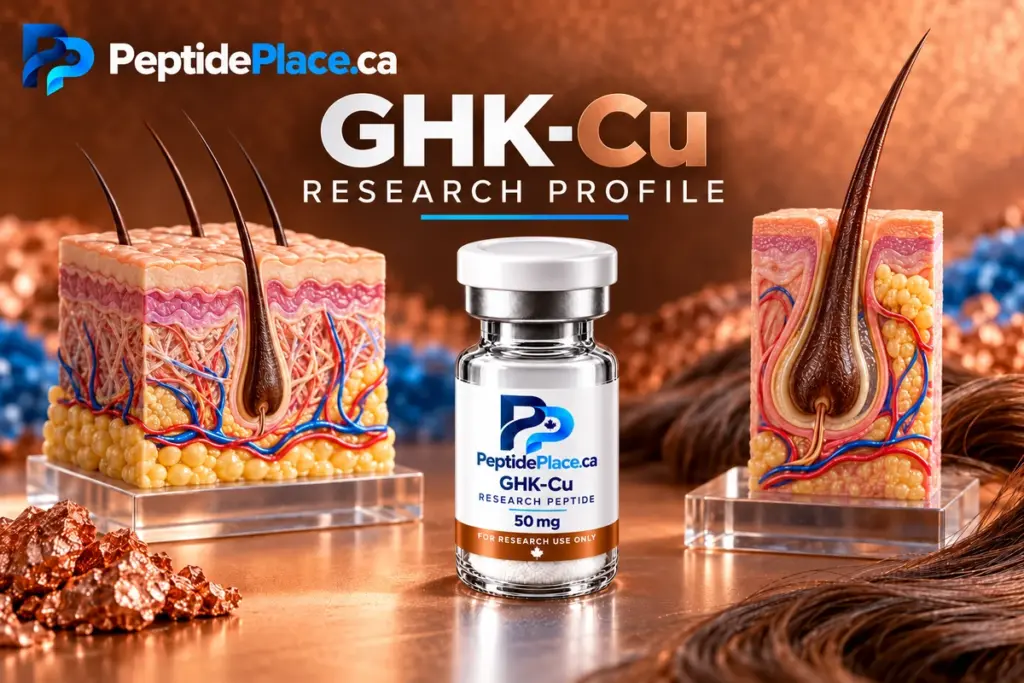
GHK-Cu is a copper-binding peptide commonly discussed for skin, collagen and hair research. GHK is a three-amino-acid chain; Cu is the chemical symbol for copper. Copper peptide and copper tripeptide-1 are familiar terms in related cosmetic discussions.
Skin, collagen and hair research
Collagen is a structural protein in skin and other connective tissues. Researchers have investigated GHK-Cu in fibroblast experiments, including work on collagen synthesis. Fibroblasts are cells involved in producing and maintaining connective tissue. Hair-related interest is a separate question that needs its own study context, rather than being inferred from a collagen finding.
Reading the evidence
Foundational fibroblast research examined collagen-related responses in cultured cells. Cosmetic studies may instead examine a finished topical formulation. These are different evidence settings. The complete formulation, concentration and measured outcome matter when interpreting skin research, and a research vial is not a ready-to-use cosmetic product.
GHK-Cu vs KLOW
GHK-Cu identifies one copper-peptide complex. KLOW combines GHK-Cu with BPC-157, TB-500 and KPV. The blend therefore adds other compounds and other research contexts. An 80 mg total blend cannot be compared with a 50 mg GHK-Cu vial as if both numbers measured the same ingredient. Review the component quantities before making that comparison.
From research to product information
This profile explains the compound. The GHK-Cu product page lists current sizes, prices, specifications and linked batch records. Keep those product facts separate from findings about a different study material.
Original source
Read the original paper on PubMed
Keep learning
How to read peptide research · How to read a COA
Connect chemical form with the right evidence
For copper-associated material, record which form and content basis the source describes. Check the specification fields and the analytical method before comparing findings. Ingredient evidence also needs to stay separate from finished-blend evidence.
GHK vs GHK-Cu: what changes when copper is involved?
GHK names a three-amino-acid peptide: glycine, histidine and lysine. GHK-Cu describes a copper-associated form. The peptide chain still has three residues. The added copper information changes the chemical description; it is not simply a longer peptide name.
| Name | What it describes | Reading question |
|---|---|---|
| GHK | The Gly–His–Lys peptide. | Did the experiment study this peptide, a copper complex or a mixture? |
| GHK-Cu | GHK associated with copper. | What copper relationship and chemical form were described? |
| A finished topical formula | A preparation with other ingredients and its own delivery conditions. | Does the evidence concern that exact preparation? |
PubChem records illustrate why the exact entity matters: the specified copper complex has a separate description from its parent peptide. Other copper-containing records also exist. A familiar synonym alone does not select the right formula or amount basis for supplied material.
What does the collagen paper actually show?
The 1988 Maquart experiment examined collagen synthesis in fibroblast cultures. Fibroblasts are cells involved in connective tissue. Its measured response helps explain a laboratory research question; it does not establish an outcome from administering a research vial to a person.
When reading a new claim, note the tested entity, study setting and measured endpoint. A paper about cell responses, a cosmetic formulation and a systemic intervention would require separate assessment. The collagen research guide follows the tissue question in more detail.
Does the same milligram amount mean the same thing?
First establish what the amount refers to: peptide, copper-associated entity or total preparation. Read the specification and quantitative method before comparing amounts. Chemical identity fields and purity versus content help resolve those different questions. A colour photograph cannot supply a missing identity measurement.
If comparing GHK-Cu with a mixture, use GHK-Cu versus KLOW or GLOW versus KLOW. Ingredient names and total blend mass do not demonstrate the combination’s performance.
Explore this topic further
Reading the evidence
Copper association and the study setting
GHK identifies the peptide and GHK-Cu its copper association. A fibroblast collagen measurement is different from a visible skin endpoint, a hair-follicle experiment or an assessment of a finished cosmetic formulation. Keep the tested material and setting attached to the finding.