 Canadian fulfilment · Free shipping $199+

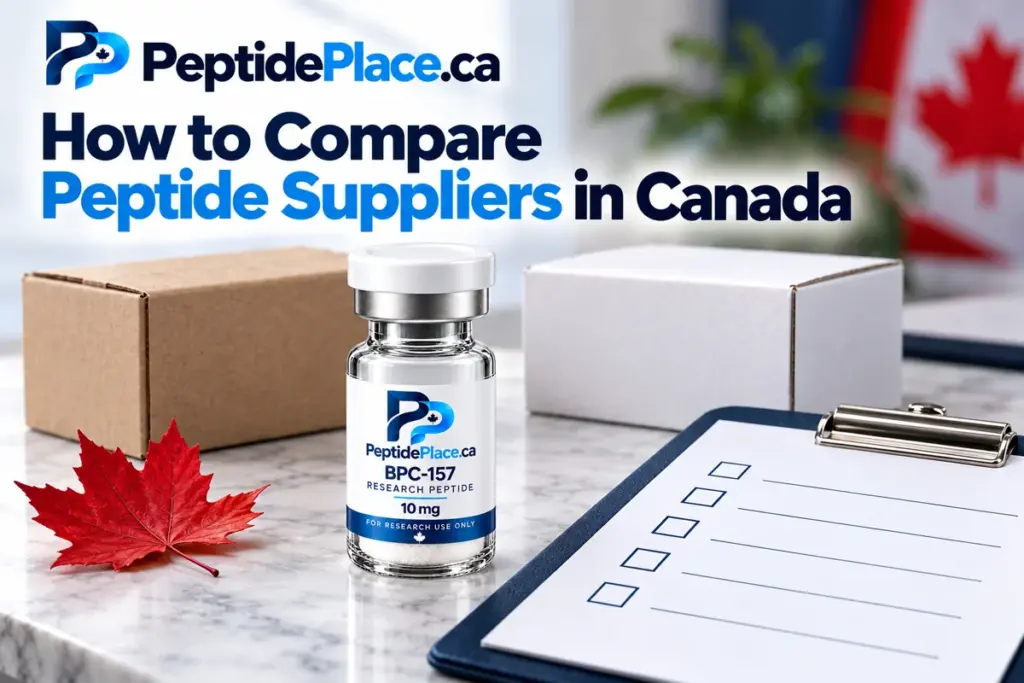
Start with purpose and Canadian authorization
A commercial listing does not establish that a product is authorized for use in people. Health Canada warns about unauthorized injectable peptides sold online, including products labelled for research use. That label does not itself create a regulatory exemption.
For personal treatment questions, consult a licensed healthcare professional and use authorized channels. This checklist evaluates research-catalogue information; it is not a way to determine that an online vial is appropriate for self-administration.
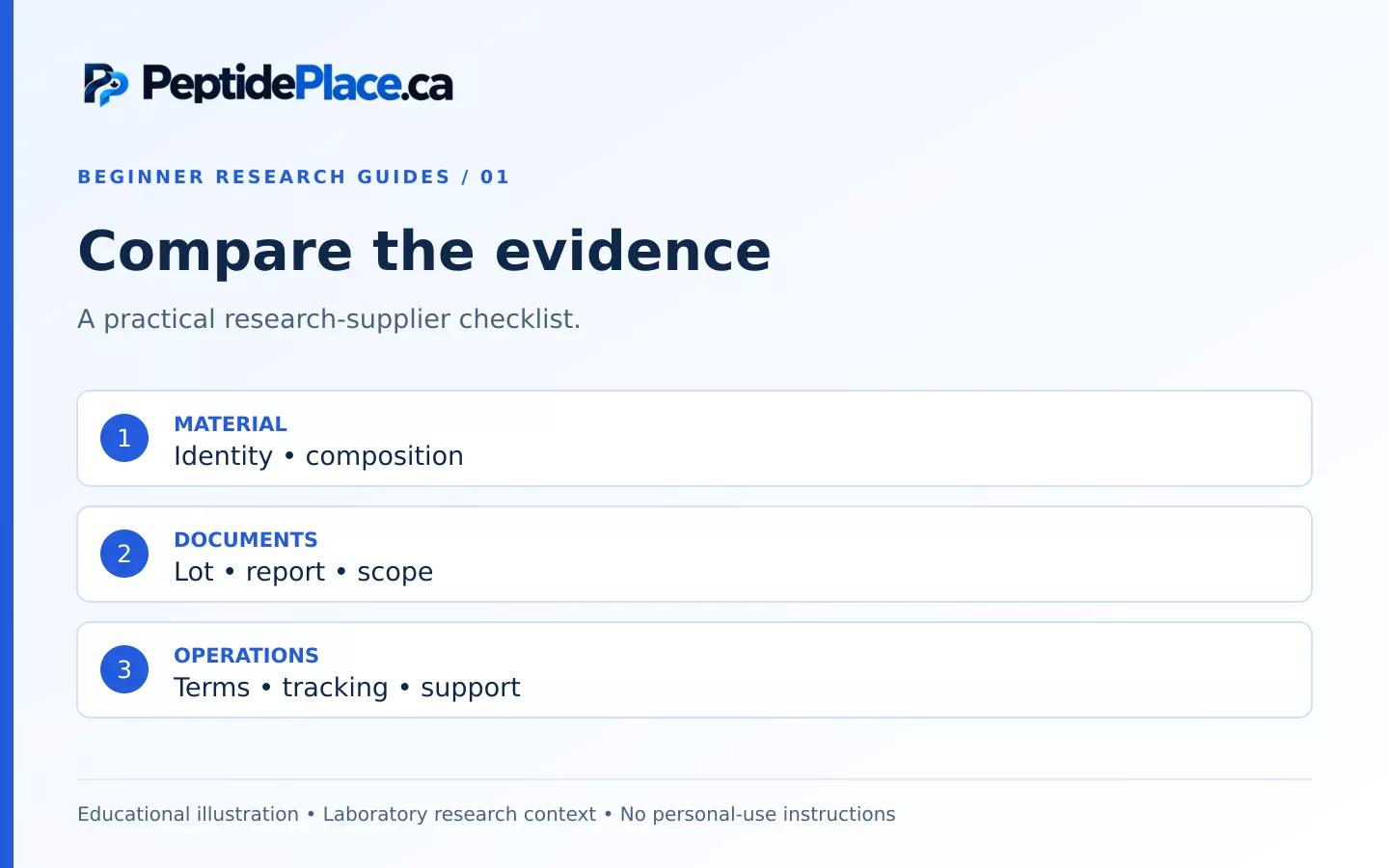
Compare Canadian research-peptide suppliers using the information you can verify: exact material identity, a matching lot record, clearly described testing and current ordering terms. Keep unresolved questions visible. A polished site, a familiar compound name or a large purity percentage cannot complete those checks for you.
A twelve-point supplier checklist
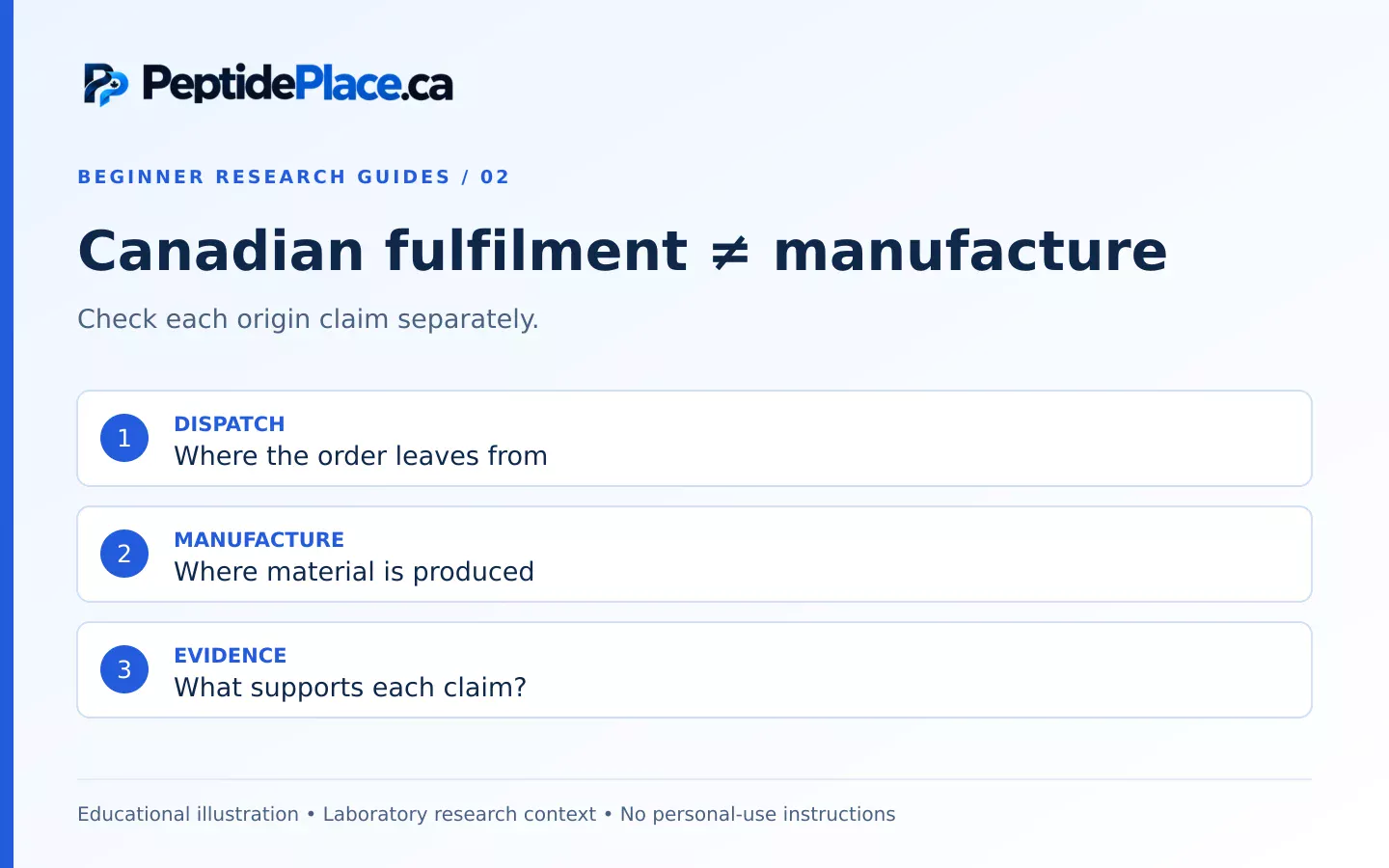
Use the same questions for every supplier, including us. Start with the same compound, supplied form and package amount so you are comparing like with like. If information is not supplied, write that down rather than guessing.
01. Exact compound identity
- What to inspect
- Record the full compound name and any sequence or identity qualifier that distinguishes it from related material.
- Useful evidence
- A specification naming the material, supported by an appropriate identity result where available.
- What remains unresolved
- A nickname, an abbreviation or a result for a related molecule does not settle exact identity.
02. Supplied form and relevant specification
- What to inspect
- Check whether the material is a peptide, coenzyme or blend, and whether the supplied form is stated.
- Useful evidence
- A current product specification identifying the form and relevant documented characteristics.
- What remains unresolved
- Salt, terminal form, hydration or other details that are not stated remain unconfirmed. Do not fill them in from a different supplier.
03. Nominal amount versus measured content
- What to inspect
- Identify what the package amount means and whether a content result is separately reported.
- Useful evidence
- A labelled nominal amount, plus any assay with its units and reporting basis.
- What remains unresolved
- A chromatographic purity percentage does not establish the absolute quantity in the vial. A label amount is not itself a measurement.
04. Blend ingredients and component quantities
- What to inspect
- List every component and check whether individual quantities are provided.
- Useful evidence
- A formulation specification and any component-specific analytical results for the matching sample.
- What remains unresolved
- Total blend milligrams cannot be divided into ingredient quantities without evidence. Studies on separate ingredients do not establish the behaviour of a mixture.
05. Lot number and sample-to-stock relationship
- What to inspect
- Match the product, package size, vial lot and laboratory sample identifier. Ask how the sample was selected.
- Useful evidence
- A traceable link between the sample submitted to the laboratory and the lot being supplied.
- What remains unresolved
- An authentic report can still describe a sample whose relationship to current stock is unclear. Record that gap.
06. Original laboratory document and issuer
- What to inspect
- Open the complete report and identify the laboratory, report number and verification route.
- Useful evidence
- An issuer-hosted record or confirmation obtained through independently checked laboratory contact details.
- What remains unresolved
- A supplier-hosted PDF or a logo alone does not authenticate the issuer or establish accreditation scope.
07. Test methods and reported endpoints
- What to inspect
- Read what each method measured, including units, result basis and relevant limitations.
- Useful evidence
- The original method description and results: identity, chromatographic purity and content are separate endpoints.
- What remains unresolved
- An unreported endpoint remains unreported. Purity alone does not establish sterility, endotoxin status, performance or suitability for administration.
08. Report date, amendments and applicable lot
- What to inspect
- Check issue date, sample date where stated, report version and any amendments.
- Useful evidence
- The final applicable document and an explanation of corrections or superseded reports.
- What remains unresolved
- A recent date does not prove a lot match; an older date alone does not prove a failed test. Clarify which document applies.
09. Manufacturing origin versus fulfilment
- What to inspect
- Ask where the material was manufactured, where it was tested and where your order will ship from.
- Useful evidence
- Separate evidence for each location, plus current dispatch and delivery terms.
- What remains unresolved
- Canadian fulfilment does not establish Canadian manufacture. A Canadian business address does not answer all origin questions.
10. Applicable handling documentation
- What to inspect
- Check storage, transport and handling information for the exact supplied material and form.
- Useful evidence
- Material-specific documentation that identifies applicable conditions and any stated stability limits.
- What remains unresolved
- A general guide cannot confirm the stability of every formulation. Ask about missing material-specific information before relying on it.
11. Complete ordering and payment terms
- What to inspect
- Compare current price, delivery charge, applicable taxes, payment instructions and confirmation steps.
- Useful evidence
- The current checkout summary and published shipping/payment terms saved with the order.
- What remains unresolved
- A low headline price does not settle the delivered total. An order confirmation and a carrier delivery estimate are different things.
12. Contact and order-issue procedures
- What to inspect
- Check the published contact route and what to do if material is missing, damaged or incorrect.
- Useful evidence
- Clear instructions for supplying the order reference, relevant photographs and package details through the stated support route.
- What remains unresolved
- Do not assume a response deadline, refund entitlement or return address that has not been confirmed. Ask before sending material back.
Your supplier-comparison worksheet
Enter the same material for two suppliers, then record the evidence and the questions still open. These are your notes, not a supplier score or a batch certificate. Use your browser’s print option or the button below to keep a copy.
What a documentation gap does—and does not—mean
A missing report is missing evidence. It does not prove fraud or a failed test, and it does not justify assuming that a satisfactory result exists. Ask for the source document, record the answer and decide whether it resolves the question relevant to your work.
Keep three separate checks in your notes. First, does the document appear to come from the stated issuer? Second, does its sample relate to the material and lot being supplied? Third, do its methods and results address the endpoint you need? Passing one check does not answer the other two.
Accreditation is also specific. If a laboratory claims it, check the named organisation and the relevant scope through the responsible accreditation body. ILAC links to recognised bodies and their accredited-facility directories; it does not rank or endorse peptide sellers.
For the next step, read how to verify a peptide lab report, how to read a peptide COA and purity versus measured content. The specifications guide explains terminology that can otherwise make two listings look equivalent.
Canadian fulfilment, manufacturing origin and delivery
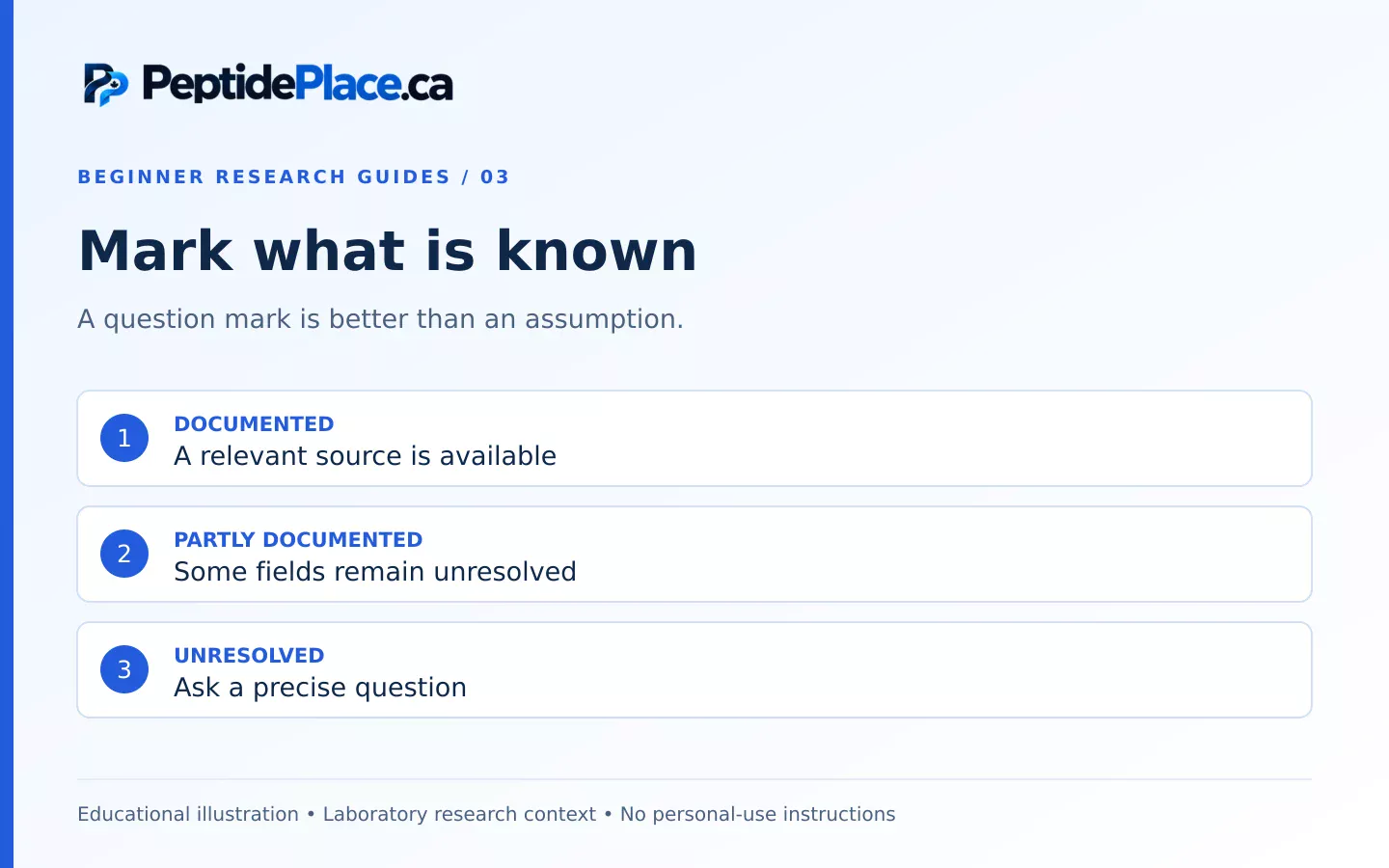
A Canadian dispatch location is useful information about ordering and delivery. It does not establish where a compound was manufactured, who produced it or where it was tested. Evaluate each claim against its own evidence instead of treating “Canadian” as one all-purpose verification.
Compare the promised dispatch process, carrier service, tracking and delivery charges. A processing estimate describes preparation before dispatch; a carrier estimate describes transit. Neither is a guaranteed arrival date unless the terms explicitly say so. For a time-sensitive laboratory order, ask about the available material and delivery expectations before paying.
Ordering and support: check the current terms
Check the final checkout total for your delivery address and selected items. Shipping is $18.99; free shipping starts at $199.00 after discounts, before tax. Pay by Interac E-Transfer using the instructions supplied with the order. Read the current shipping and payment terms for the carrier, processing details and any exclusions.
Keep the order confirmation and follow the payment instructions supplied with your order. Contact support about missing, damaged or incorrect items before returning anything; keep the packaging and order references. Returns and order issues · Contact Peptide Place
Save the product identity, selected size and order confirmation. If you need a report, request it for the exact material and lot rather than relying on a general testing badge. For an issue after delivery, give support the order number, product, size and lot code, and retain the label and packaging.
How to check Peptide Place
This guide is published by Peptide Place, a commercial supplier. Apply the same checklist to our listings. We do not assign ourselves an independent score or treat a research citation as proof about a supplied batch.
- Open the catalogue and the relevant product to inspect current options, specifications and stock.
- Check published lot documentation for the exact compound, size and label code.
- Read our documentation policy and ask about an unconfirmed field.
- Review shipping and payment information and the final checkout summary.
- Contact us about a product, source document or order; use the order-issue procedure before sending anything back.
No batch certificates are currently published in Lab Results. Ask for the document matching the material and lot you are evaluating. An empty report field is missing information, not proof of a result. Check the current published records.
The Peptide Place homepage introduces the store. The Shop is for browsing current materials; this checklist is for evaluating the information behind a supplier’s offer. Our comparison tool explains differences between compounds without treating them as interchangeable.
Questions about comparing Canadian suppliers
Does “99% purity” prove the vial contains its labelled amount?
No. Read the method and result basis. Relative chromatographic purity and absolute content are different measurements. Ask for a separately reported content result when that endpoint matters.
What if the laboratory report has no matching lot number?
Ask the supplier how the sample is linked to current stock. An authentic document may still leave the sample-to-stock relationship unresolved. Do not silently assign it to a different lot.
Is a four-ingredient blend more informative than a single compound?
It raises additional composition questions. Record all ingredients and any confirmed individual quantities. A total blend amount does not identify each component’s amount or establish the effect of combining them.
Does Canadian fulfilment mean the peptide was made in Canada?
No. Manufacturing, testing and fulfilment are separate facts. Ask for evidence specific to the origin claim.
Can a certificate establish every characteristic I need?
Only endpoints actually measured and reported can be evaluated from that document. Identity, purity, content, sterility and other tests are distinct. A research paper is a different source again: it does not test a current commercial lot.
Should I reject a supplier just because a field is missing?
Missing information is an unresolved question. Ask for it and assess the response against your material requirements. Avoid assuming either a failed test or an unpublished passing result.
How should I compare prices?
Start with the same compound, form and package basis. Record the delivered total and documentation gaps. Price per nominal milligram can help compare sizes within a meaningful material comparison; it does not rank different molecules or reveal a blend’s ingredient-by-ingredient cost.
Sources and editorial notes
Prepared by Peptide Place. Revised 4 November 2026. This is a supplier-evaluation guide, not an independent laboratory assessment or a claim of personal clinical benefit.
- ILAC: accredited conformity assessment bodies and verification directories. Use the responsible body’s directory to check a laboratory and its scope.
- Certificate interpretation, document verification and specification terminology explain the individual checks in more detail.
- Store terms are linked to their operational pages above so current ordering information can be checked directly. Editorial policy · Report a correction.
Additional technical sources
Use the educational checks behind the supplier checklist
A supplier comparison is clearer when the terms mean the same thing on both sides. Read what research-grade describes, what 99% purity means and how report authentication works before ranking claims.