 Canadian fulfilment · Free shipping $199+

KPV
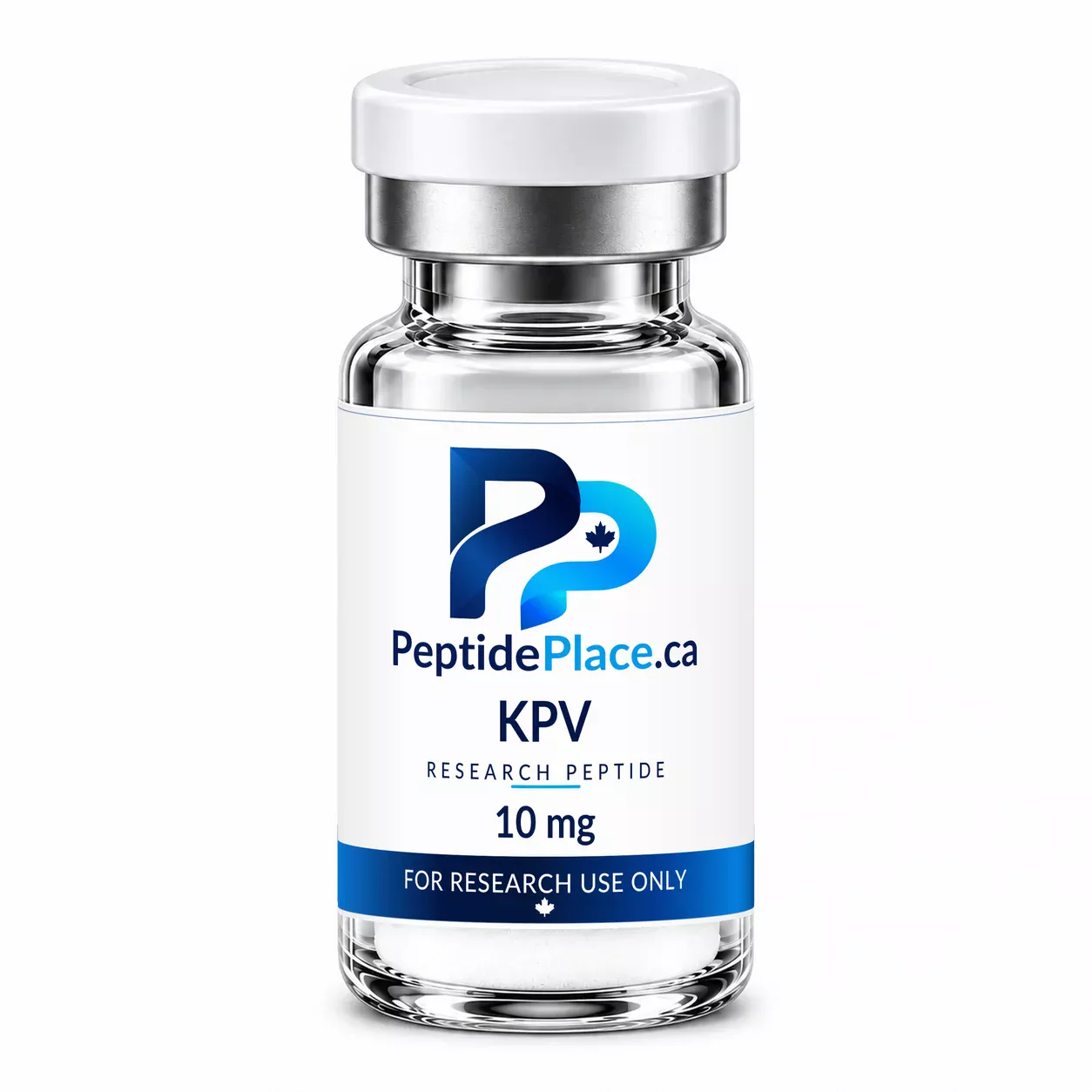
KPV is a short peptide made from three amino acids: lysine, proline and valine. It is investigated for inflammatory signalling, including intestinal research. It is commonly compared with BPC-157 when the starting interest is gut health.
Multi-vial savings: Mix eligible vials. Save automatically.
For laboratory research only. Not for human or veterinary use.
The compound, clearly explained
What is KPV?
KPV takes its name from its three amino acids: lysine, proline and valine. Its small size is part of its research identity. It is often discussed in relation to the gut lining and how cells respond to inflammatory signals.
Explore the KPV research profile →Know the material
Specifications
| Package size / nominal content | 10 mg |
|---|
Categories: Gut & Inflammation
Additional information
| Size | 10 mg |
|---|
Exact size. Exact lot.
Batch & COA
For documentation for a specific size or lot, send us the product name, size and lot number.
Research & references
What is KPV?
KPV is a peptide made of three amino acids: lysine, proline and valine. Its name comes from their one-letter codes. Researchers study it in models of inflammatory signalling, including intestinal models.
What have researchers found?
Why researchers looked at PepT1
PepT1 is a transport protein that can move small peptides into cells. In a published study, researchers investigated whether KPV uptake through PepT1 was involved in changes to inflammatory signals in intestinal and immune cell models.
What the mouse experiments found
The same paper examined KPV in two mouse models of colitis. It reported reduced measures of inflammation under the experimental conditions. The study’s cell and animal observations provide evidence about those models.
Studies and further reading
Vial options
Specifications and batch documentation
Check that the supplied form and sequence are documented as Lys–Pro–Val and read the basis used for nominal and measured content.
Reference chemistry and identity details
| Nominal vial content | 10 mg; content basis requires confirmation |
|---|---|
| Reference sequence | Lys-Pro-Val |
| Reference class | Tripeptide |
| Reference formula | C16H30N4O4 for free-terminal Lys-Pro-Val |
| Reference average molecular weight | Approximately 342.43 g/mol; not a batch measurement |
| Reference database | PubChem CID 125672 |
| Supplied terminal chemistry and salt | Supplier confirmation pending |
Use the batch and COA panel for documentation for the exact size and lot. Identity, analytical purity and measured content are separate results. If you have a question about a vial, include the lot number from its label.
How to read a certificate of analysis · Browse published lab results
Storage and laboratory handling
Follow the written conditions for the supplied form and lot. Keep the original label and record the lot and date received. If your work depends on a particular storage temperature or stability window, ask for the product-specific documentation.
Laboratory storage and handling guide
Explore this topic further
Compare the compound first
Composition & comparisons
How to compare intestinal studies
A cell signal, a tissue measurement and a clinical outcome describe different things. Check which cells or animals were studied, whether the experiment included a control and how inflammation was measured.
Read the research in context
What the PepT1 study was trying to explain
PepT1 transports certain small peptides into cells. The cited paper asked whether that transport played a part in the response to KPV. An uptake result addresses how a material reached cells. An inflammatory signalling measurement addresses what changed after that. These are related questions with different endpoints.
How the intestinal models differ
Cultured cells allow researchers to control which cells encounter the peptide and which signals they measure. Mouse colitis models include more of the interactions that occur in a living animal. For each experiment, check how inflammation was induced and whether the result was a change in signalling, tissue appearance or another measure.
A change in a mouse model can help researchers decide what to study next. It does not tell you whether people with a particular condition would experience the same outcome. That would require a study with the relevant human population and outcome.
KPV as a single peptide or blend component
The KPV product lists one three-amino-acid sequence. KLOW lists KPV alongside three other components. If you are following a KPV paper, identify whether it used a single peptide or a mixture before comparing it with either listing.
Read the product specification and batch report together
Start with the product name, size and lot number. The product specification describes the supplied material and the amount listed on the label. A certificate of analysis, often called a COA, records what a lab found in a particular sample. Match the lot number before using any test result. When the listing has multiple sizes, check that the document applies to the selected size or explains why the same report covers more than one option.
Identity, purity and measured content are separate questions. An identity test checks which material the lab detected. A purity figure depends on the method and what that method measures. Measured content is a quantitative result and should state its units and basis. A result expressed as a percentage of chromatographic peak area does not tell you the milligrams present in a vial. Look for a separate content result if the amount matters to your work.
Keep a copy of the specification and matching report with your research records. If a field is important and the report does not give it, ask for the specific detail. For work that depends on storage temperature or stability, request the written conditions for the supplied form and lot. A reference paper may describe how its authors handled a different preparation, which is a separate record.
How to read a peptide COA · Peptide purity versus measured content · Peptide Place quality standards · Browse published lab results
Related product records: BPC-157 · KLOW. For background and original sources, browse the Research Library or the peptide comparison guides.
A practical reading order
Read the experimental design in two passes. First, find the experiment that addresses transport through PepT1. Then find the cell or animal outcome used to assess inflammation. If a paper changes the transport pathway, ask how it checked that uptake had changed. If it reports a tissue result, note how it was scored and whether the investigators used more than one model.
KPV vs BPC-157 and KLOW
KPV is a three-amino-acid peptide. BPC-157 is a different single peptide with its own study literature. KLOW lists KPV with three other components.
Useful answers
Your questions about KPV
What does KPV stand for?
Lysine, proline and valine.
What is PepT1?
A protein that transports certain small peptides into cells.
Was the cited colitis research a human trial?
The cited paper used laboratory cell models and mouse models.
What does the vial amount mean?
It is the nominal package amount. Look for a separate measured-content result if your work requires one.
How do I identify the correct lab report?
Match the product, package size and lot number. Check what the lab tested and how the result was reported.
Where can I check handling conditions?
Use the specification for the supplied form and lot. Contact the team if a condition required for your work is unclear.
Where is the matching lot report?
Select the exact size, then check the linked batch record. If no certificate is published, ask for the matching source report. A report for another size or lot is not evidence for this one.
Does a vial amount equal measured peptide content?
Not necessarily. The package amount is the listing specification. Check whether the source certificate separately reports measured content, and read its units and basis. Chromatographic purity is not a content assay.
Where are salt form and storage conditions listed?
Use the supplier-confirmed specifications for the material and lot. Reference chemistry does not confirm the supplied salt, terminal form or handling conditions. Contact Peptide Place if a required field is not documented.
How do Canadian shipping and payment work?
Pay by Interac e-Transfer using the order instructions. Shipping is tracked Canada Post Xpresspost: $18.99 below $199, or free from $199 after discounts and before tax. Transit timing depends on the destination and current carrier conditions.
Do you provide personal-use instructions?
No. These products are supplied for laboratory research only, not for human or veterinary use. Vial quantities do not describe a recommended dose.
How does KPV research differ from BPC-157 gut research?
Start with the question each paper asks. A transport or inflammatory-signalling experiment may have little in common with an injury model that measures tissue damage. Compare endpoints before comparing the compounds.
What should I include in a documentation question?
Send the product name, the selected size and the lot number if you have it. If you need a specific result, such as identity or measured content, mention that too so we can help you find the right document.
Continue your research
Related research compounds
- Repair & Recovery
BPC-157
Tendon and ligament recovery, tissue repair and gut research, explained simply.
10 mg
$69.99In stock
- Peptide Blends
- Skin & Hair
A question before you order?
Help with product information, documentation or an existing order.