 Canadian fulfilment · Free shipping $199+

Wolverine
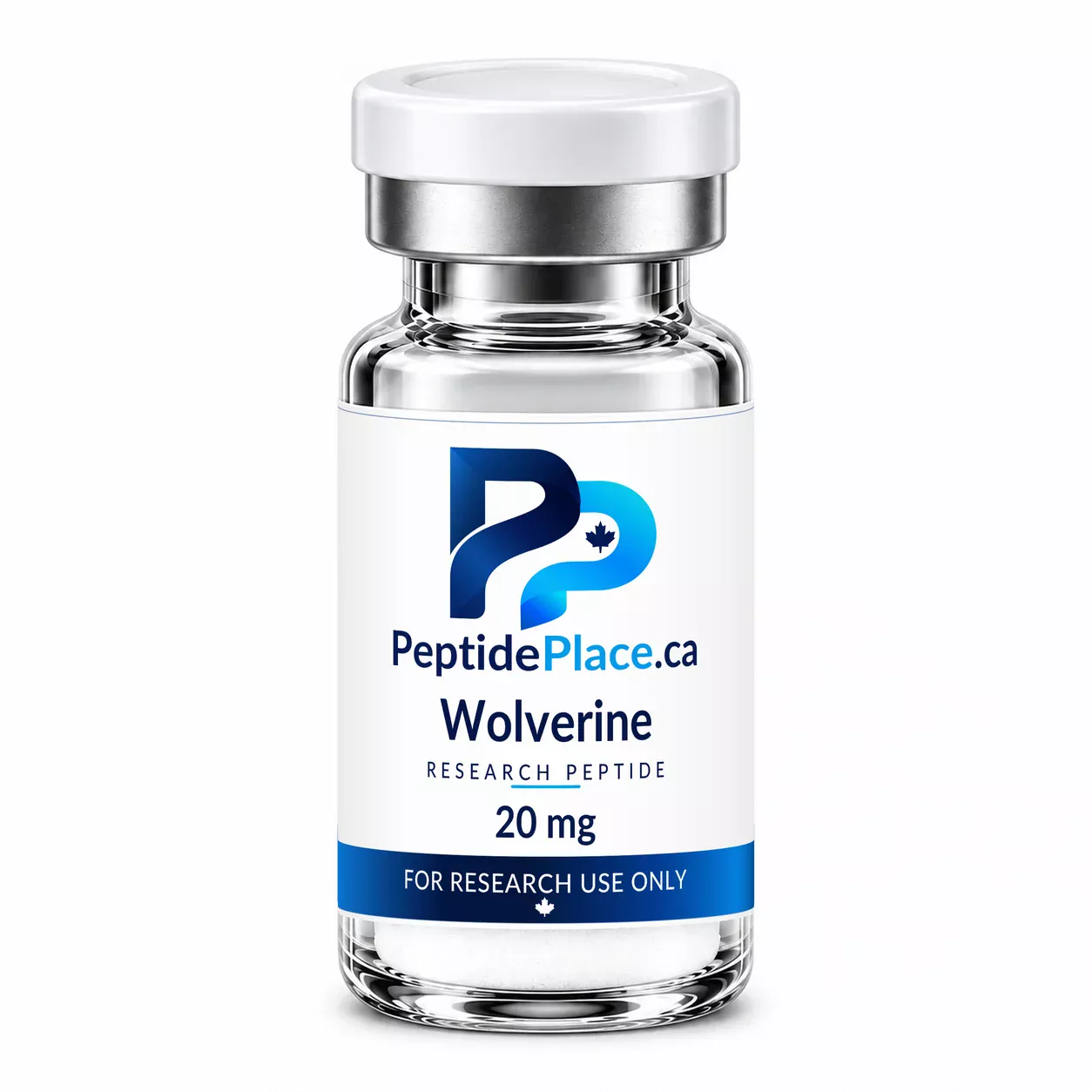
Packaging reference. Confirm the selected size and supplied label.
Wolverine is a named blend of BPC-157 and TB-500, two compounds commonly discussed in recovery and tissue-repair research. It provides a single listing for both named ingredients. The catalogue lists a 20 mg total blend amount.
Multi-vial savings: Mix eligible vials. Save automatically.
For laboratory research only. Not for human or veterinary use.
The compound, clearly explained
What is Wolverine?
Wolverine is a named blend of BPC-157 and TB-500, two compounds commonly discussed in recovery and tissue-repair research. It provides a single listing for both named ingredients. The catalogue lists a 20 mg total blend amount.
Explore the Wolverine research profile →Know the material
Specifications
Categories: Peptide Blends, Repair & Recovery
Additional information
| Size | 10 mg, 20 mg |
|---|
Exact size. Exact lot.
Batch & COA
Select a package size to view documentation for that exact SKU.
Research & references
Common interests · Compare · Sizes & prices · Specifications & testing · FAQs · Deeper research ·
What is Wolverine?
Wolverine is a research blend that lists BPC-157 and TB-500 together.
Both names appear in tissue research, but studies may use one material at a time. For this blend, check how much of each component is documented and which material the study actually tested.
BPC-157 and TB-500 in one blend
BPC-157 and TB-500 have different identities and research backgrounds. Their overlap in recovery discussions is the reason this pairing attracts interest. A blend introduces an additional composition question: how much of each ingredient is present? The product name and total amount alone cannot answer it.
What the evidence shows
Individual-compound research can help explain why the ingredients are discussed together. It does not establish an outcome for the current combination. A useful blend study would identify the exact ingredients, their proportions, the experimental model and the measured result. Those details are needed before claiming an advantage from the combination.
Wolverine sizes and current Canadian pricing
Choose a listed size to see its current price and availability. The number in milligrams describes the nominal package amount. For a blend it describes the total blend, unless an individual ingredient amount is explicitly listed. Compare sizes within the same compound before using price per milligram to assess value.
Specifications and batch testing
Reference chemistry and identity details
| Nominal blend content | 20 mg total; quantity basis requires confirmation |
|---|---|
| Named ingredients | BPC-157 and TB-500 |
| BPC-157 quantity and form | Supplier confirmation pending |
| TB-500 quantity and structure | Supplier confirmation pending |
| Component ratio | Not supplied; do not infer a 1:1 blend |
| Single molecular formula or weight | Not applicable to the mixture |
| Finished material form | Supplier confirmation pending |
A certificate of analysis, or COA, reports results for a tested sample. Match its lot number to the label and read identity, purity and measured content as separate results. Use our COA reading guide if the terminology is new.
Storage and handling
Follow the documented conditions supplied for this exact material. Keep the product label, batch code and source report together, and record receipt and any handling conditions relevant to your work. If the storage specification is missing, ask us for the product-specific information. Our storage guide explains which details to check.
Continue exploring
Browse related research interests or visit the Research Library for clear explanations of the terminology and evidence.
References and evidence context
Published studies concern the materials and methods described in each paper. Product information here concerns laboratory research material, not individual treatment or dosing advice.
Understanding Wolverine as a two-component research blend
The blend name and the ingredient identities
Wolverine is the catalogue name for a blend listing BPC-157 and TB-500. It is not the name of one peptide sequence. The composition connects it with recovery-related searches, while the scientific and analytical questions still depend on the identities of the two named materials.
That means there are two levels of identification to check. First, what exactly does each component name represent in the supplier specification? Second, what amount of each component is present in the mixture? A familiar blend label does not answer either question by itself, and a nominal total cannot replace the individual component details.
Why a total of 20 mg does not establish 10 mg plus 10 mg
An equal split can look like a convenient assumption, especially when comparing a blend with two single-material listings. The confirmed catalogue does not establish that ratio. The same total could describe different proportions, so the amount of BPC-157 or TB-500 cannot be calculated without a component breakdown.
Ask for a specification that names each ingredient amount and its content basis. If the document reports a total powder mass, distinguish it from measured peptide content. This is important when comparing prices, because the price per total blend milligram is not automatically the price per milligram of either component.
How to read the ingredient research
BPC-157 and thymosin-related research provide background for why these names appear in repair discussions. The cited sources concern their own experimental materials and models. They do not test the current Wolverine composition, verify its ingredient ratio or demonstrate an outcome for this product.
The TB-500 identity question needs particular care when a source studied full-length thymosin beta-4. A shared research family is not evidence that two preparations are identical. Keep the source material, the supplier-specified component and the exact blend as three separate descriptions until documentation establishes the relationship.
What a clear Wolverine report would show
The report should identify the sample and lot, explain the methods and state which component results are supported. Look for evidence of ingredient identity and, where quantitative claims are made, component-specific content. A single purity percentage without a clear method description cannot automatically establish both ingredients and their amounts.
Check how the analysis handles a mixture and whether the reported result concerns one peak, several components or an overall specification. The COA guide explains the basic report fields, while Peptide Blends Explained addresses the additional composition questions.
Documenting handling and remaining uncertainties
Keep the supplier instructions for the exact mixture rather than combining storage statements from the two standalone ingredients. Stability of each material on its own is not a complete stability assessment of their mixture. If conditions, usable periods or component details are absent, record the gap and request clarification.
For a useful comparison record, retain the product name, selected option, nominal total, SKU, lot and available report. Note that component amounts remain unconfirmed where applicable. The Wolverine profile gives the educational overview when published. This listing remains the place to check actual catalogue availability and material-specific documentation.
Sources for this deeper overview
- BPC-157 tendon-cell research: ingredient background
- Thymosin beta-4 wound-model research: related-material background
Read the research in context
A two-component blend in tissue research
BPC-157 and TB-500 come up in discussions about connective tissue for different reasons. The BPC-157 tendon paper looks at outgrowth and cell migration. The thymosin-related sources include analytical identification and an animal wound experiment. Keep the materials and endpoints separate when following the references.
A result from a tendon sample cannot be combined with a wound-model result to predict what happens when the compounds are put in one vial. That would require an experiment that uses the exact blend and reports the mixture, its comparator and the outcome.
How to compare the blend with the single compounds
Start by listing the components you need to compare. Then check the amount and identity for each. If an experiment describes a concentration for one ingredient, a total blend mass alone does not supply the corresponding concentration. The single-compound product records and the blend documentation answer different questions.
What makes a blend report useful
Look for a report that distinguishes the individual components by an appropriate method. Where the question is how much of each is present, look for separately reported quantitative results. The lot number and size are essential for matching that report to the supplied vial.
Read the product specification and batch report together
Start with the product name, size and lot number. The product specification describes the supplied material and the amount listed on the label. A certificate of analysis, often called a COA, records what a lab found in a particular sample. Match the lot number before using any test result. When the listing has multiple sizes, check that the document applies to the selected size or explains why the same report covers more than one option.
Identity, purity and measured content are separate questions. An identity test checks which material the lab detected. A purity figure depends on the method and what that method measures. Measured content is a quantitative result and should state its units and basis. A result expressed as a percentage of chromatographic peak area does not tell you the milligrams present in a vial. Look for a separate content result if the amount matters to your work.
Keep a copy of the specification and matching report with your research records. If a field is important and the report does not give it, ask for the specific detail. For work that depends on storage temperature or stability, request the written conditions for the supplied form and lot. A reference paper may describe how its authors handled a different preparation, which is a separate record.
How to read a peptide COA · Peptide purity versus measured content · Peptide Place quality standards · Browse published lab results
Related product records: BPC-157 · TB-500 · KLOW. For background and original sources, browse the Research Library or the peptide comparison guides.
A practical reading order
Compare the BPC-157 and TB-500 records independently before interpreting the blend. If you are comparing it with KLOW or GLOW, identify the shared components and check their documented quantities rather than comparing the package totals.
Explore this topic further
Compare the compound first
Composition & comparisons
Wolverine vs BPC-157 vs KLOW
BPC-157 alone identifies one peptide. Wolverine adds TB-500. KLOW includes those two names and adds GHK-Cu and KPV. The simplest comparison is therefore one, two or four named ingredients, followed by their documented quantities. More ingredients is a composition difference, not proof of better performance.
See the side-by-side comparison.
Single materials compared with the blend
A BPC-157 listing gives a nominal amount for that single named material. Wolverine adds a second named component and an unconfirmed split. Comparing them is therefore not simply a matter of choosing a larger package. The research question and the need to distinguish ingredients should guide the comparison.
Our BPC-157 vs Wolverine comparison keeps the composition differences visible. Where an experiment needs a known amount of BPC-157, a blend total alone does not supply that information. Likewise, ingredient papers cannot tell you whether the actual mixture has the same stability or behaviour as the separately studied materials.
Wolverine compared with KLOW
KLOW adds GHK-Cu and KPV to the two ingredient names listed for Wolverine. That changes the composition; it does not establish that one blend is a stronger version of the other. Each needs its own ingredient breakdown, material forms and analytical support.
Use KLOW vs Wolverine to compare the named components and current catalogue options. Do not use the difference between the two total amounts to infer how much of a shared ingredient is present. A larger blend total can still contain an unknown amount of BPC-157 or TB-500 when proportions are not supplied.
Useful answers
Your questions about Wolverine
Does 20 mg mean 10 mg BPC-157 plus 10 mg TB-500?
Not necessarily. The current catalogue confirms the total blend amount but does not confirm an equal ingredient split. Compare documented component quantities rather than assuming a ratio.
Which Wolverine sizes are available?
The live options above show the current sizes and prices. Select a size in the purchase panel to check availability and its exact SKU.
Where is the matching lab report?
Available reports appear in Specifications and batch testing above. Select a size first for a variable product. You can also search the lot number in Lab Results.
How do I check delivery in Canada?
Read Shipping & Ordering and review the final checkout total for your address. Contact us if a delivery or payment detail needs clarification.
Is Wolverine a single molecule?
No. The catalogue identifies a blend containing BPC-157 and TB-500. Each component needs its own material identity, and the mixture needs a documented ingredient breakdown to establish individual amounts.
Can I assume the two ingredients are present equally?
No. The nominal total does not confirm a 1:1 ratio. An equal split needs an explicit composition specification and appropriate supporting documentation.
Does combining repair-related ingredients prove a better result?
No. Overlapping research interests do not demonstrate an effect of the exact combination. Ingredient studies do not establish synergy, blend stability or a comparative outcome for this product.
Where is the matching lot report?
Select the exact size, then check the linked batch record. If no certificate is published, ask for the matching source report. A report for another size or lot is not evidence for this one.
Does a vial amount equal measured peptide content?
Not necessarily. The package amount is the listing specification. Check whether the source certificate separately reports measured content, and read its units and basis. Chromatographic purity is not a content assay.
Where are salt form and storage conditions listed?
Use the supplier-confirmed specifications for the material and lot. Reference chemistry does not confirm the supplied salt, terminal form or handling conditions. Contact Peptide Place if a required field is not documented.
How do Canadian shipping and payment work?
Pay by Interac e-Transfer using the order instructions. Shipping is tracked Canada Post Xpresspost: $18.99 below $199, or free from $199 after discounts and before tax. Transit timing depends on the destination and current carrier conditions.
Do you provide personal-use instructions?
No. These products are supplied for laboratory research only, not for human or veterinary use. Vial quantities do not describe a recommended dose.
Why is the TB-500 identity relevant in a blend?
The name alone may leave the sequence unclear. For a study comparison, check the material specification for the TB-500 component, then compare it with the sequence the authors examined.
What should I include in a documentation question?
Send the product name, the selected size and the lot number if you have it. If you need a specific result, such as identity or measured content, mention that too so we can help you find the right document.
Continue your research
Related research compounds
- Repair & Recovery
BPC-157
Tendon and ligament recovery, tissue repair and gut research, explained simply.
10 mg
$69.99In stock
- Repair & Recovery
TB-500
Tissue repair and recovery research. Compare it with BPC-157 and thymosin beta-4.
$74.99In stock
- Peptide Blends
- Peptide Blends
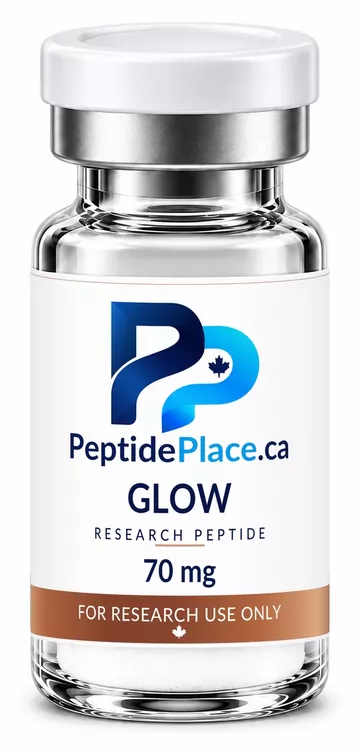
GLOW
GHK-Cu, BPC-157 and TB-500 in one blend for skin, collagen and tissue research.
70 mg
$109.99In stock
A question before you order?
Help with product information, documentation or an existing order.